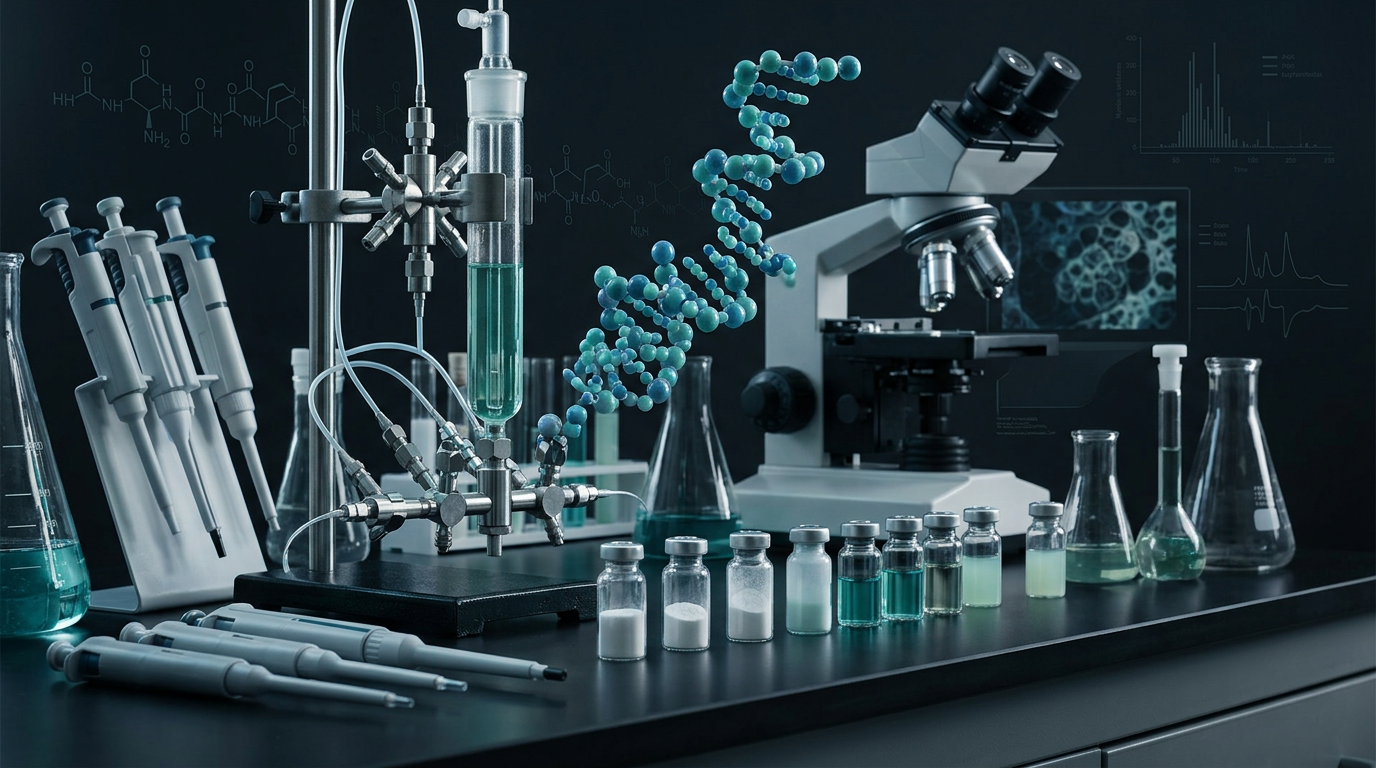
Defining Peptide Standards for Research
In the context of analytical biochemistry, peptide standards for research are highly purified sequences used as reference points for the identification and quantification of target analytes. These standards are essential for calibrating instrumentation such as High-Performance Liquid Chromatography (HPLC) and Mass Spectrometry (LC-MS), ensuring that experimental data remains reproducible across different laboratory environments.
Unlike crude peptide mixtures, a research standard undergoes rigorous characterization to establish its exact molecular weight, amino acid sequence, and purity percentage. By utilizing these benchmarks, researchers can distinguish between baseline noise, impurities, and the specific peptide of interest during complex assays.
The Role of Purity in Quantitative Analysis
The integrity of laboratory data depends heavily on the purity profile of the reference material. Peptide standards for research are typically synthesized via Solid-Phase Peptide Synthesis (SPPS) and subsequently purified to levels exceeding 98%. High purity is critical because even minor contaminants, such as truncated sequences or residual solvents like trifluoroacetic acid (TFA), can shift retention times or alter peak areas during chromatographic analysis.
Analytical chemists rely on these standards to generate calibration curves. By injecting known concentrations of a certified standard, the laboratory can calculate the response factor of the detector. This allows for the precise determination of unknown samples, making the standard an indispensable tool for verifying the concentration and potency of experimental reagents.
Selection Criteria and Physical Properties
When selecting peptide standards for research, investigators must account for the physical state and stability of the molecule. Most standards are provided in a lyophilized (freeze-dried) format to minimize hydrolytic degradation and facilitate long-term storage. The presence of counter-ions, such as acetate or TFA salts, must also be considered, as these affect the net weight of the peptide and the resulting molarity of prepared solutions.
Solubility is another critical factor. Depending on the hydrophobicity of the amino acid sequence, researchers may need to utilize specific buffers or organic solvents to achieve a homogeneous solution. Proper handling, including minimizing freeze-thaw cycles and maintaining an inert atmosphere (such as argon or nitrogen), is necessary to preserve the chemical signature of the standard over time.
Characterization and Documentation Requirements
A robust analytical framework requires that peptide standards for research be accompanied by comprehensive documentation. This typically includes a Certificate of Analysis (COA) featuring a representative HPLC chromatogram and a Mass Spectrometry report. These documents verify the mass-to-charge ratio (m/z) and confirm that the primary sequence matches the theoretical design.
Advanced research may also require amino acid analysis (AAA) for absolute quantification, as this method accounts for water content and salts that standard UV detection might overlook. By cross-referencing these analytical reports, laboratories ensure that their experimental inputs are standardized, reducing the margin of error in multi-phase studies.
Laboratory Use and Research-Only Disclaimer
The peptide standards for research discussed in this article are intended strictly for in vitro laboratory applications and strictly controlled experimental settings. They serve as chemical reagents for analytical validation, structural biology, and proteomics research. Use in diagnostic or diagnostic-adjacent procedures is outside the scope of their intended design.
These materials are not for human or animal consumption, nor are they intended for therapeutic, clinical, or medical use. This information is provided for educational purposes only for qualified laboratory professionals. Proper safety protocols, including the use of personal protective equipment (PPE) and adherence to local biosafety regulations, must be followed when handling any research-grade peptide.
More questions?
Ask our Support Team — they can answer follow-up questions about this topic, COAs, storage, or anything else in the research library.
Tap the "Chat with us" tab on the right edge of any page.