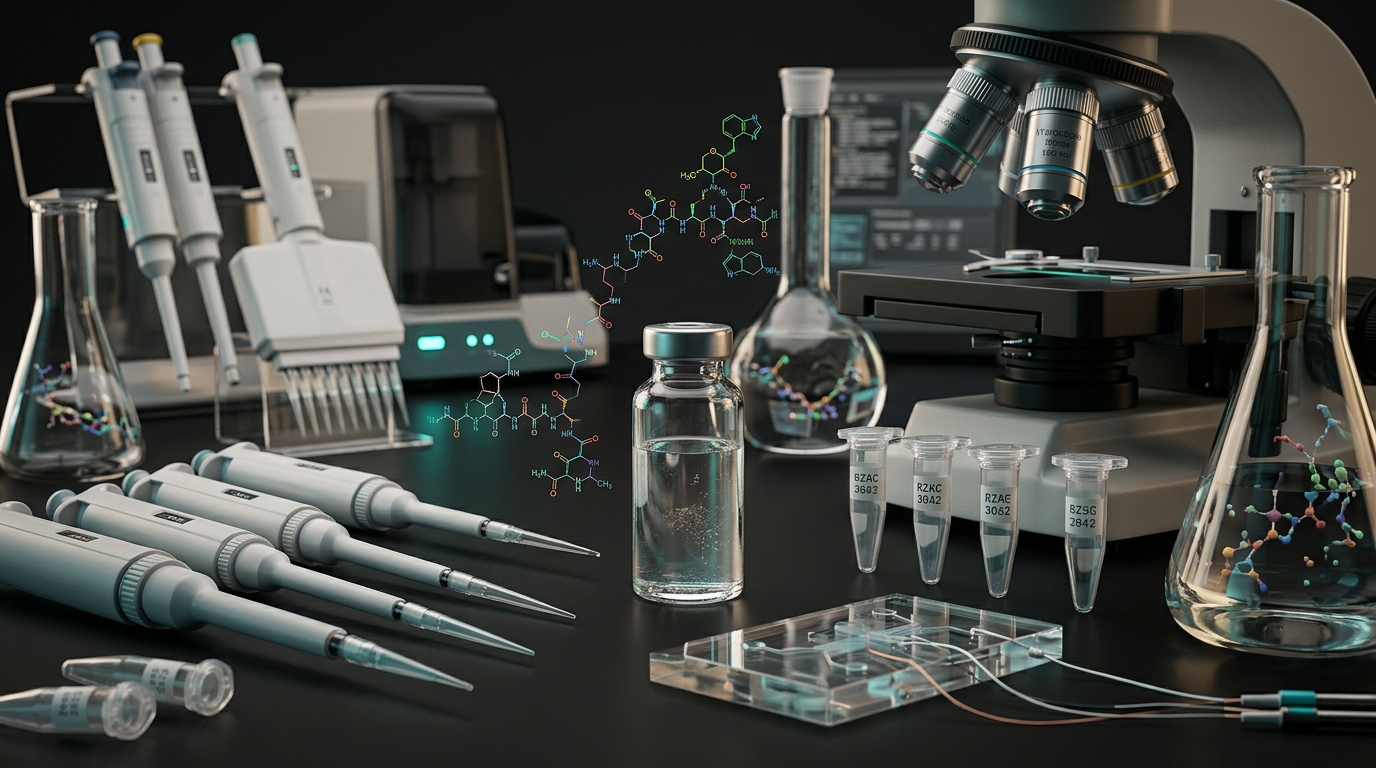
Introduction to Premium Research Peptides
In biochemical research, the term premium research peptides refers to synthetic amino acid chains manufactured to rigorous specifications of purity and sequence accuracy. These reagents serve as critical tools in diverse fields including oncology, endocrinology, and molecular biology, where they act as ligands, agonists, or inhibitors in controlled experimental environments.
The utility of these compounds depends entirely on their molecular integrity. Unlike industrial-grade chemicals, high-grade research peptides must exhibit a high degree of homogeneity, typically exceeding 98% purity, to ensure that experimental observations are the result of the peptide itself rather than metabolic artifacts or residual impurities left over from the synthesis process.
Chemical Synthesis and Purity Verification
Modern production of premium research peptides primarily utilizes Solid Phase Peptide Synthesis (SPPS). This methodical process involves the sequential addition of protected amino acids to a resin substrate. While efficient, SPPS can produce truncated sequences or diastereomers, necessitating sophisticated post-synthesis purification techniques.
To verify the quality of these reagents, laboratories rely on High-Performance Liquid Chromatography (HPLC) and Mass Spectrometry (MS). HPLC provides a purity profile by separating the target peptide from impurities based on hydrophobicity, while MS confirms the exact molecular weight. Only by correlating these two data points can a researcher verify that the chemical structure matches the theoretical design.
Biological Activity and Research Stability
The secondary and tertiary structures of peptides are often as critical as their primary sequence. Premium research peptides must maintain their conformational stability to interact correctly with target receptors or enzymes in vitro. Factors such as pH, ionic strength, and temperature can induce denaturation or aggregation, which significantly alters experimental outcomes.
Furthermore, the presence of counter-ions—typically Trifluoroacetic acid (TFA)—is a necessary byproduct of the cleavage process during synthesis. For specific sensitive cell culture models, researchers may require 'TFA-free' peptides (acetate or hydrochloride salts) to prevent unintended cytotoxic effects that could skew data interpretation.
Laboratory Handling and Storage Protocols
Maintenance of the integrity of premium research peptides requires strict adherence to storage cold chains. Most lyophilized peptides are stable at -20°C for short-term storage, but for long-term preservation, -80°C is often preferred to minimize atmospheric moisture absorption and enzymatic degradation.
When preparing working solutions, researchers must account for the solubility characteristics of the specific peptide sequence. Basic peptides may require dilute acetic acid, while acidic peptides may require basic buffers for successful reconstitution. Reconstituted peptides are significantly more prone to degradation and should be used promptly or aliquoted to avoid repeated freeze-thaw cycles.
Research Use Only Disclaimer
The information provided in this article regarding premium research peptides is intended exclusively for educational and laboratory research purposes. These compounds are not intended for human or animal consumption, nor are they designed for diagnostic or therapeutic use in clinical settings.
This laboratory-grade material is intended for use by qualified professionals and researchers only. The scientific overview provided herein does not constitute medical advice or a recommendation for any specific application outside of a controlled research environment.
More questions?
Ask our Support Team — they can answer follow-up questions about this topic, COAs, storage, or anything else in the research library.
Tap the "Chat with us" tab on the right edge of any page.