Introduction to Large-Scale Peptide Libraries
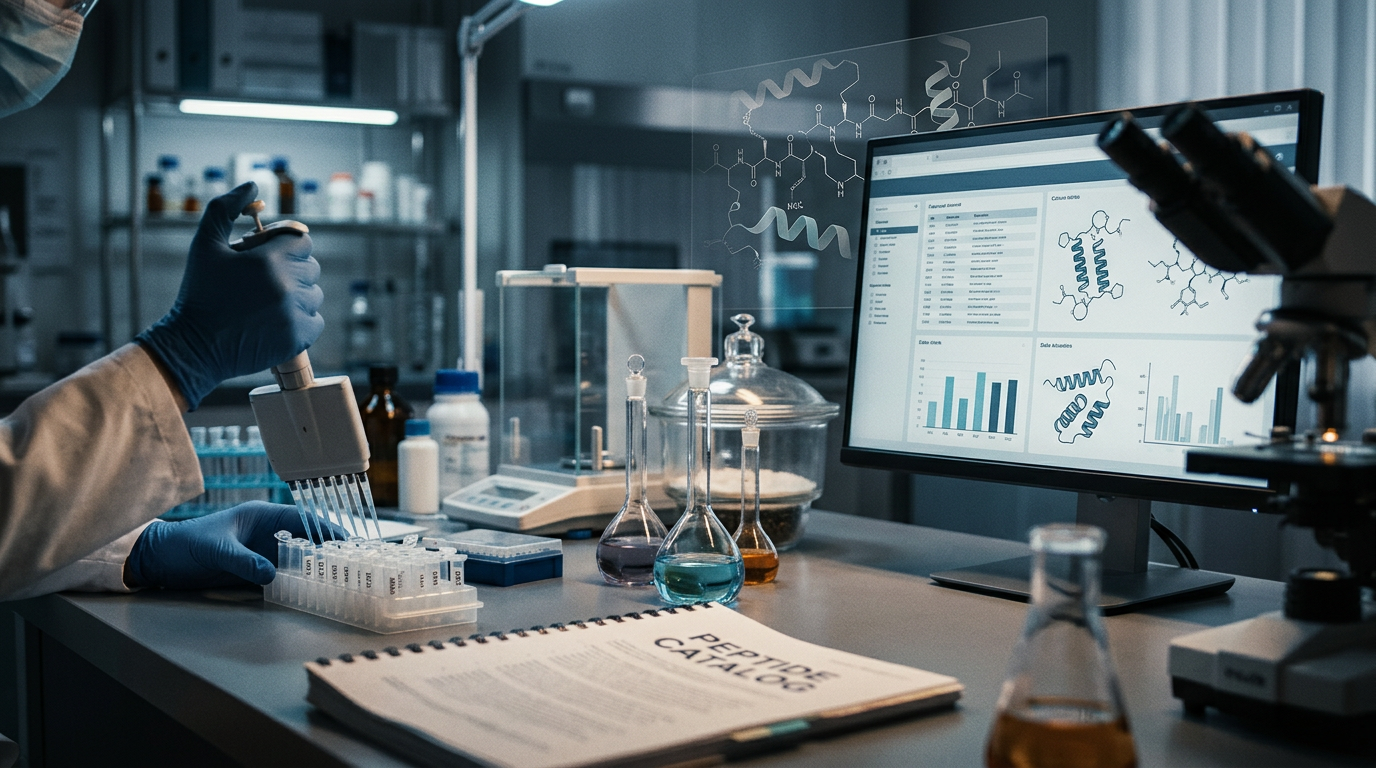
In modern biochemical research, the availability of a comprehensive peptide catalog online serves as a foundational resource for identifying specific ligands, enzyme substrates, and signaling molecules. These catalogs categorize synthetic peptides based on their primary sequence, molecular weight, and purity levels, allowing researchers to source precise tools for in vitro and in vivo experimental models.
The expansion of digital libraries has streamlined the acquisition of diverse sequences, ranging from short dipeptides to complex, long-chain polypeptides with secondary structural modifications. Accessing these sequences through a centralized database allows for efficient comparison of analog sequences and structural variants essential for structure-activity relationship (SAR) studies.
Technical Standards and Analytical Verification
A rigorous peptide catalog online provides more than just a list of sequences; it provides transparency regarding the analytical characterization of each compound. Scientific integrity depends on the use of High-Performance Liquid Chromatography (HPLC) to confirm purity and Mass Spectrometry (MS) to verify molecular weight against the theoretical profile.
Researchers must evaluate the provided Certificates of Analysis (CoA) to ensure that the impurities—inherent byproducts of Solid Phase Peptide Synthesis (SPPS)—are within acceptable limits for their specific assay requirements. Typically, research-grade peptides are offered at purities exceeding 95% or 98%, depending on the sensitivity of the biological system being investigated.
Chemical Modifications and Customization
Modern peptide catalogs often feature specialized modifications that enhance the stability or detectability of the molecule. This includes N-terminal acetylation, C-terminal amidation, and the incorporation of fluorescent tags or biotinylation for localization studies. These modifications are critical for extending the half-life of a peptide in enzymatic environments or facilitating binding affinity assays via surface plasmon resonance (SPR).
Understanding the chemical nuances of these modifications allows investigators to select the most appropriate derivative for their hypothesis. For instance, cyclization via disulfide bridges may be necessary to mimic the natural conformation of a bioactive protein domain, a detail often specified within the technical data of the catalog entry.
Handling and Reconstitution Protocols
The utility of substances sourced from a peptide catalog online is dependent on proper laboratory handling post-acquisition. Peptides are generally supplied as lyophilized powders to ensure long-term stability. Researchers must consider the net peptide content—the actual weight of the peptide excluding counterions and residual water—when calculating molar concentrations for experiments.
Solubility often varies based on the hydrophobicity of the sequence. Proper reconstitution protocols may involve the use of sterile water, dilute acetic acid, or dimethyl sulfoxide (DMSO), depending on the specific amino acid composition. Improper handling at this stage can lead to peptide aggregation or degradation, compromising the reproducibility of the research data.
Laboratory Research Requirements and Disclaimer
The compounds listed in any professional peptide catalog online are synthesized strictly for laboratory research use only. These substances have not been evaluated for safety or efficacy in humans or animals outside of a controlled experimental setting. They are not intended for diagnostic, therapeutic, or medical applications.
It is the responsibility of the principal investigator and the research institution to ensure that all materials are handled in compliance with local biosafety regulations. This article and the associated catalog data are provided for educational and scientific purposes and do not constitute medical or professional advice.
More questions?
Ask our Support Team — they can answer follow-up questions about this topic, COAs, storage, or anything else in the research library.
Tap the "Chat with us" tab on the right edge of any page.