Introduction to Peptide Compounds for Research
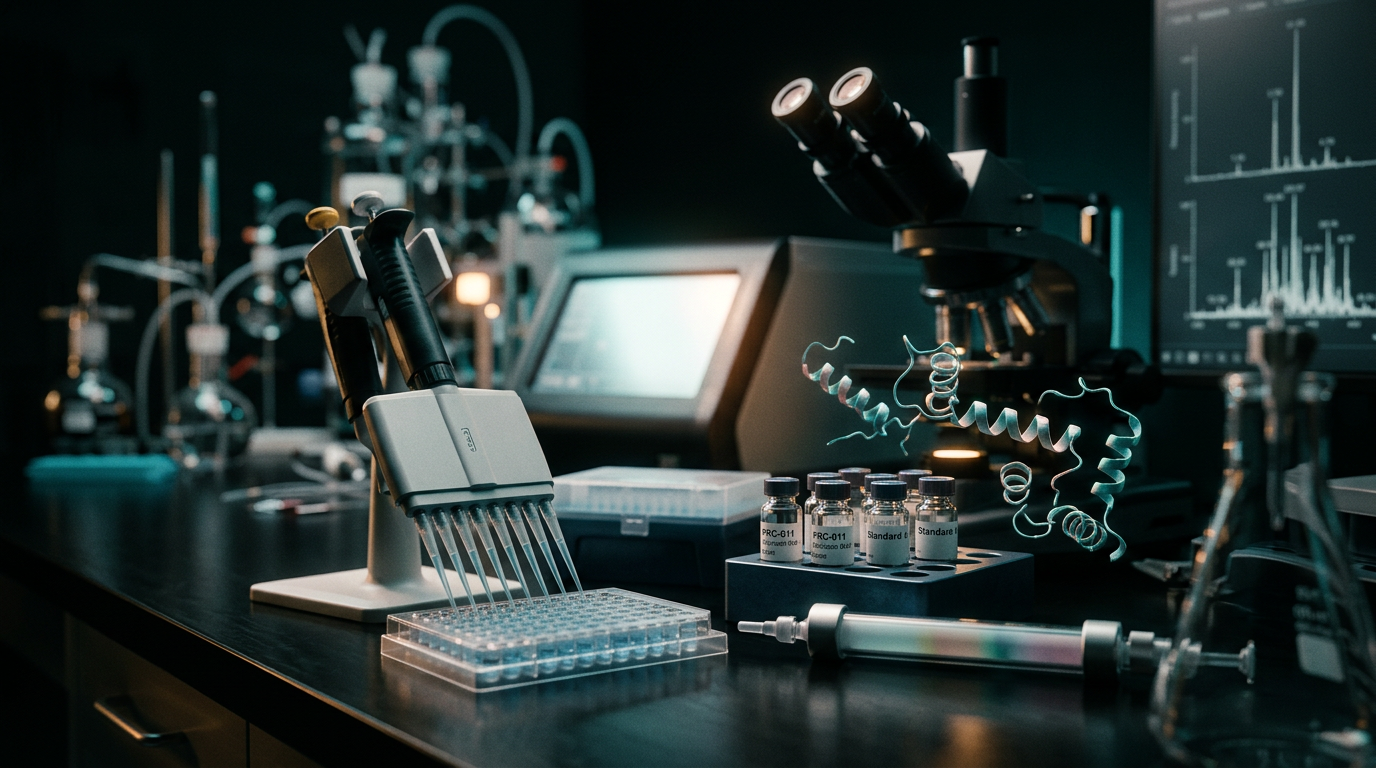
Peptide compounds for research consist of short chains of amino acids linked by peptide bonds, typically ranging from two to fifty residues in length. These molecules serve as essential tools in biochemistry, pharmacology, and molecular biology, acting as ligands, signaling molecules, or enzyme substrates. Because of their intermediate size between small molecules and large proteins, peptides occupy a unique chemical space that allows for high specificity and potency in experimental models.
In a laboratory setting, researchers utilize these compounds to investigate cellular pathways, receptor-ligand interactions, and protein folding dynamics. The structural diversity of peptides, derived from the nearly infinite combinations of the twenty standard amino acids and various non-canonical modifications, provides a vast library of candidates for in vitro and in vivo scientific inquiry.
Biochemical Synthesis and Structure
The production of peptide compounds for research primarily utilizes Solid-Phase Peptide Synthesis (SPPS), a method that allows for the precise assembly of amino acid sequences from the C-terminus to the N-terminus. This process involves the use of protective groups—such as Fmoc or Boc—to prevent undesired side reactions during coupling steps. Following synthesis, the peptides are cleaved from the solid resin and purified using High-Performance Liquid Chromatography (HPLC) to ensure chemical homogeneity.
Structural integrity is paramount in research applications. Secondary structures, such as alpha-helices, beta-sheets, or disulfide bridges, dictate the biological activity of the compound. Researchers must verify these structures through analytical techniques such as Mass Spectrometry (MS) and Circular Dichroism (CD) to ensure the peptide aligns with the theoretical model being tested.
Applications in Experimental Methodologies
Peptide compounds for research are frequently employed as probes in imaging and assay development. Biotinylated or fluorescently labeled peptides enable the visualization of protein localization and the measurement of binding affinities through techniques like Surface Plasmon Resonance (SPR) or Fluorescence Polarization. These applications are critical for mapping the interactome within various biological systems.
Furthermore, peptides are used in structural biology to stabilize protein complexes for X-ray crystallography or cryo-electron microscopy. By mimicking endogenous motifs, synthetic peptides can either inhibit or activate specific enzymatic sites, allowing researchers to isolate and study the function of individual proteins within complex metabolic networks.
Laboratory Handling and Stability
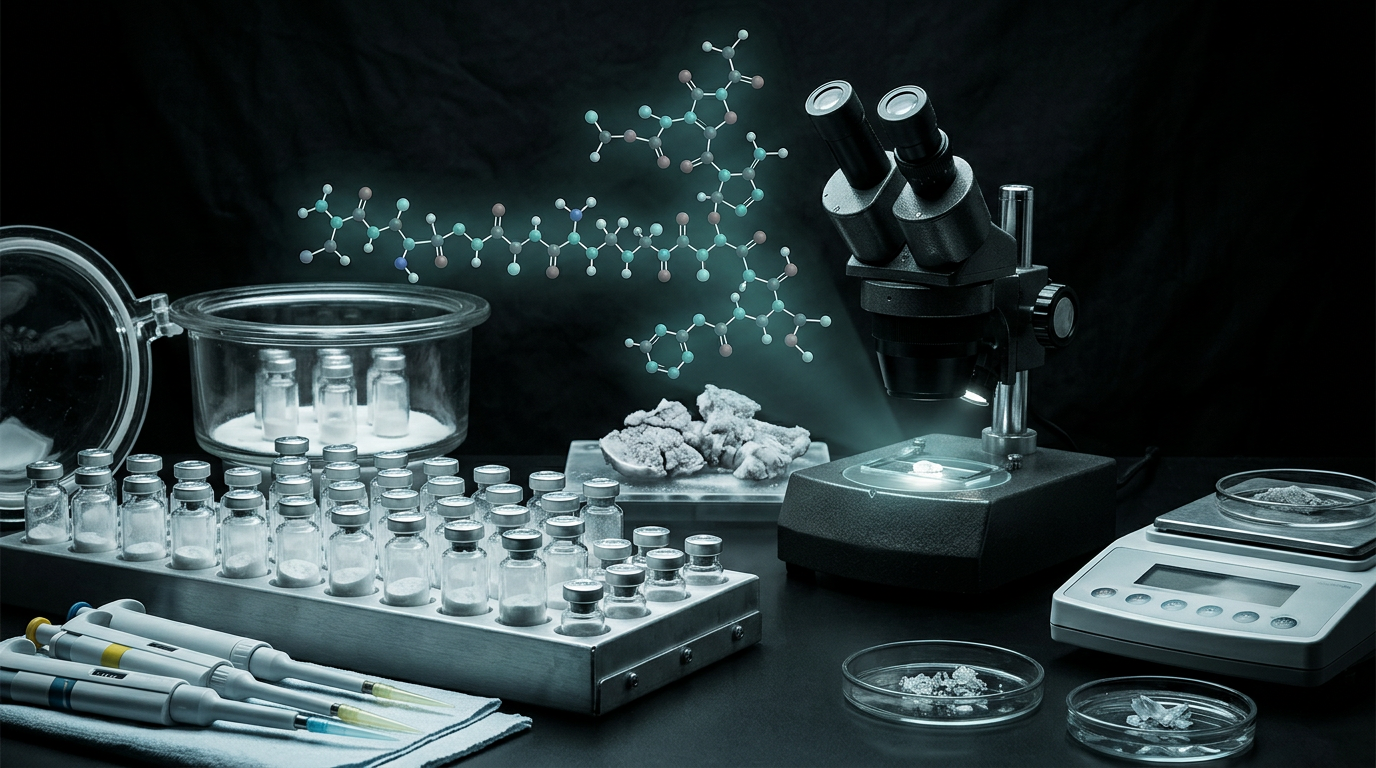
The stability of peptide compounds for research is highly dependent on their sequence and the environment in which they are stored. Most synthetic peptides are provided as lyophilized powders, which offer the greatest stability when kept in a desiccant-controlled environment at -20°C or -80°C. Maintaining a dry environment is critical, as peptides are prone to hygroscopic absorption, which can lead to hydrolytic degradation.
When preparing solutions, researchers must consider the isoelectric point (pI) of the peptide to select the appropriate buffer. Solubility can often be improved through the addition of sterile-filtered aqueous solutions or small amounts of organic solvents like DMSO, depending on the hydrophobicity of the sequence. Repeated freeze-thaw cycles should be avoided to prevent denaturation and aggregation of the sample.
Strict Adherence to Research Use Protocols
All peptide compounds for research discussed herein are intended strictly for laboratory exploration and in vitro or animal model experimentation. These materials are chemical reagents meant for use by qualified professionals in a controlled research environment. They are not intended for human or veterinary use, nor are they designed for diagnostic or therapeutic applications.
It is the responsibility of the investigator to ensure that the use of these compounds complies with all local, state, and federal regulations. Proper personal protective equipment (PPE) must be worn during handling, and all materials must be disposed of according to established biosafety and chemical waste guidelines.
More questions?
Ask our Support Team — they can answer follow-up questions about this topic, COAs, storage, or anything else in the research library.
Tap the "Chat with us" tab on the right edge of any page.