Defining High Purity Research Peptides
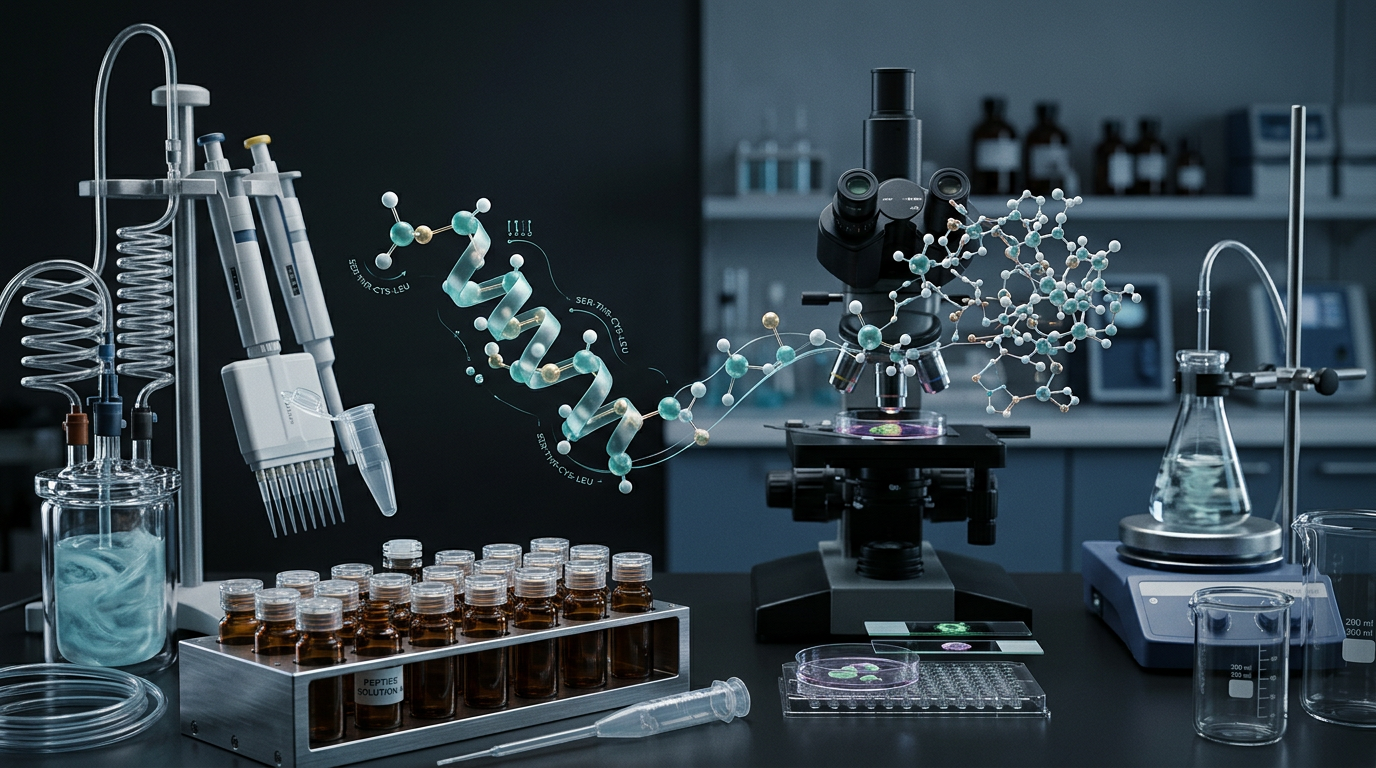
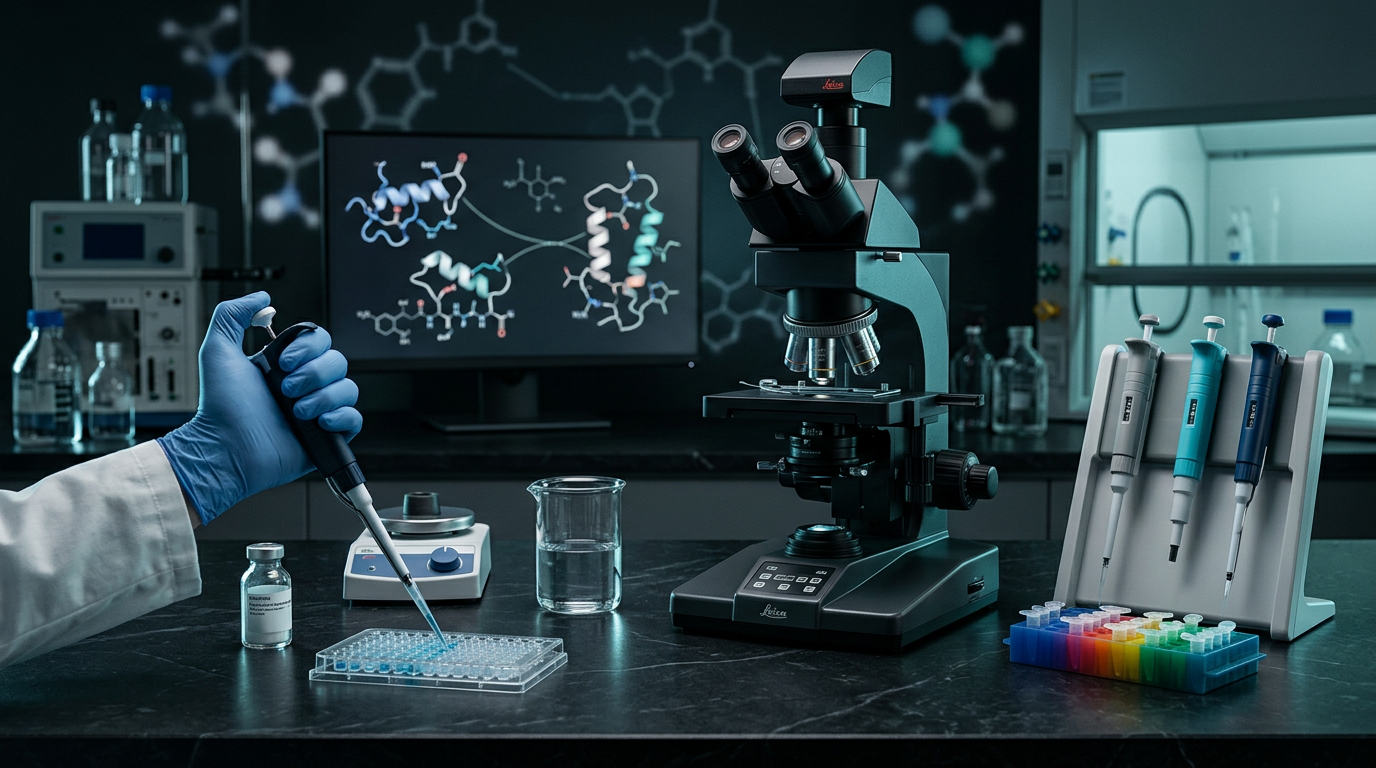
In the context of laboratory biochemistry, high purity research peptides are amino acid chains synthesized under rigorous controlled conditions to minimize the presence of truncated sequences, deletions, and chemical byproducts. The standard for 'high purity' in research typically refers to a peptide content of 98% or greater, as determined by analytical chromatography. This level of refinement is necessary to ensure that experimental observations are the result of the target peptide's primary sequence rather than interference from residual reagents or synthesis artifacts.
The classification of these reagents focuses on the removal of contaminants such as trifluoroacetic acid (TFA), moisture, and organic solvents. Precision in sequence assembly and subsequent purification maintains the structural integrity required for precise binding affinity assays and cellular signaling studies.
Chemical Synthesis and Purification Protocols
The production of high purity research peptides generally employs Solid-Phase Peptide Synthesis (SPPS). This method allows for the systematic addition of protected amino acids to a resin-bound chain. However, despite the efficiency of SPPS, incomplete coupling or premature deprotection can lead to 'impurity' profiles consisting of closely related diastereomers or deletion sequences. To rectify this, crude peptides undergo extensive purification, most commonly via High-Performance Liquid Chromatography (HPLC).
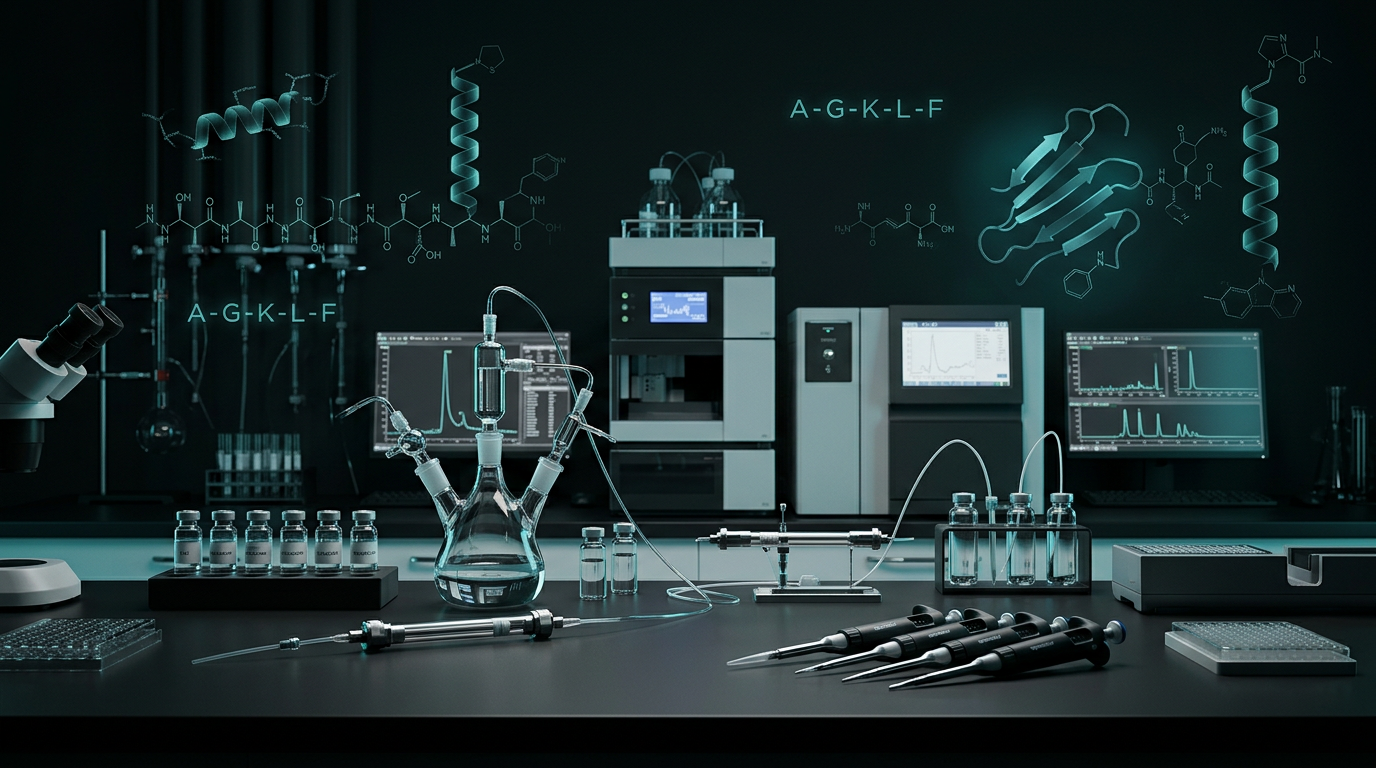
During HPLC purification, the crude mixture is passed through a stationary phase under high pressure, separating components based on hydrophobicity. Only the fractions corresponding to the target mass are collected. The resulting lyophilized powder reaches the threshold of high purity research peptides, providing a consistent substrate for quantitative analysis.
Analytical Verification and QC Metrics
Verification of purity is a multi-step process involving both Mass Spectrometry (MS) and analytical HPLC. Mass spectrometry confirms the identity of the peptide by measuring the molecular weight (m/z ratio) against the theoretical mass of the desired sequence. This ensures that no significant errors occurred during the assembly of the amino acid chain.
Analytical HPLC provides the quantitative assessment of purity by measuring the area under the curve (AUC) of the primary peak relative to any secondary peaks. Additional quality control metrics may include amino acid analysis (AAA) to determine exact peptide content and Karl Fischer titration to measure residual water content, both of which are critical for calculating accurate molar concentrations in a lab environment.
Handling and Stability in Laboratory Settings
The stability of high purity research peptides is highly dependent on their sequence and the environment in which they are stored. Factors such as oxidation and deamidation can degrade a high-purity sample into a mixture of degraded fragments if proper protocols are not followed. Researchers are advised to store lyophilized peptides at -20°C or -80°C to minimize enzymatic or chemical degradation.
When reconstituting these peptides, researchers should utilize sterile, deoxygenated buffers and avoid repeated freeze-thaw cycles. The use of high purity research peptides requires careful attention to the pH of the solvent, as extreme acidity or alkalinity can catalyze the cleavage of peptide bonds, effectively nullifying the purity achieved during synthesis.
Research Use Only Disclaimer
The information provided in this article is intended solely for educational and laboratory research purposes. High purity research peptides are chemical reagents designed for in vitro and animal model experimentation by qualified professionals. They are not intended for human or animal clinical use.
Nothing contained herein should be interpreted as medical advice or as a recommendation for the treatment of any disease or condition. The handling and use of these substances must be conducted in compliance with local regulations and institutional safety guidelines.
More questions?
Ask our Support Team — they can answer follow-up questions about this topic, COAs, storage, or anything else in the research library.
Tap the "Chat with us" tab on the right edge of any page.