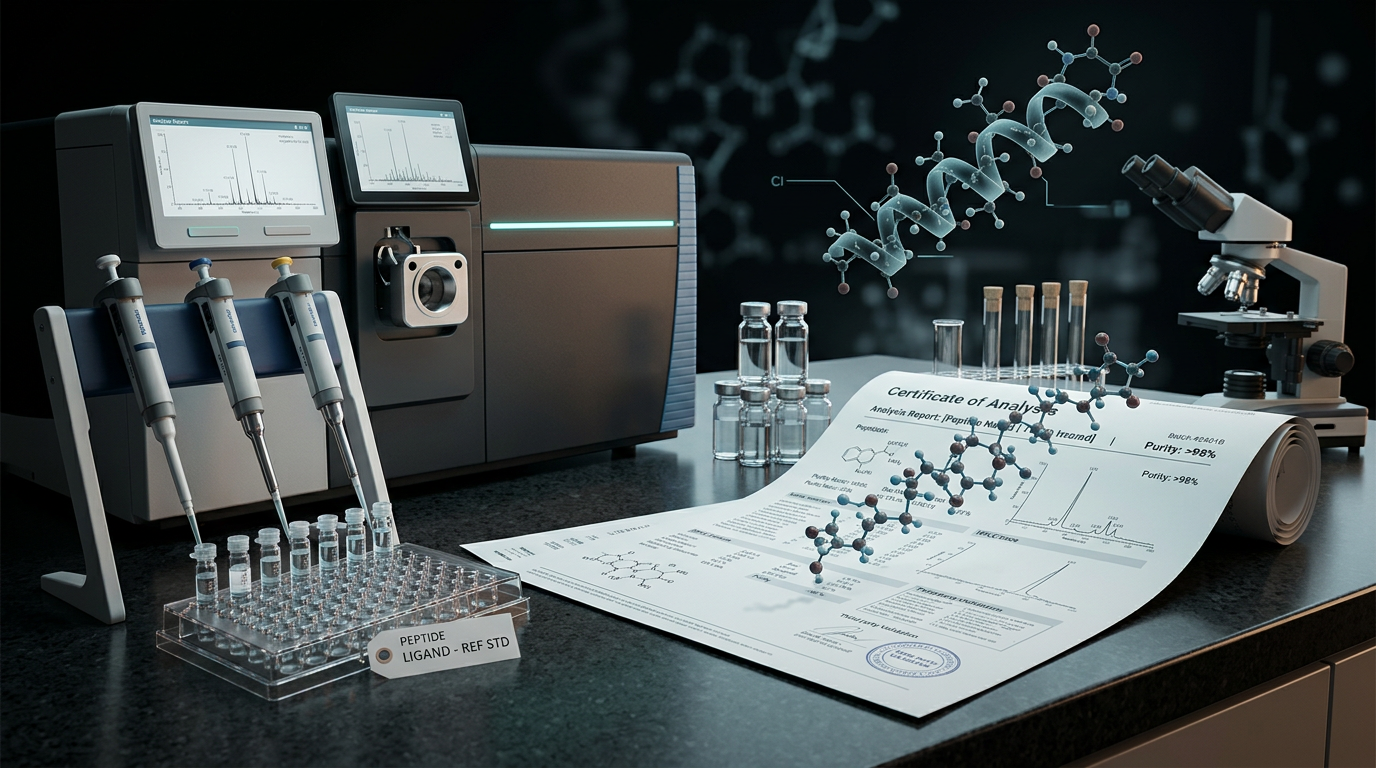
Defining Peptide Compounds with COA Standards
In the sphere of biochemical research, peptide compounds are short chains of amino acids linked by peptide bonds, synthesized to investigate physiological pathways, receptor binding, and enzymatic interactions. A Certificate of Analysis (COA) is the essential document that accompanies these reagents, providing a quantitative report on the material's identity, purity, and composition.
Utilizing peptide compounds with COA documentation ensures that the researcher is working with a verified molecular structure. Without this documentation, the risk of significant variability in experimental results increases, as impurities or incorrect sequences can lead to off-target effects or false-negative data in sensitive cellular assays.
Analytical Methods for Purity Verification
The validation of high-grade peptides typically involves two primary analytical techniques: High-Performance Liquid Chromatography (HPLC) and Mass Spectrometry (MS). HPLC is employed to determine the chromatographic purity of the sample by separating the target peptide from any truncated sequences or residual solvents. A standard COA will display the peak area percentage, with the batch-specific peak-area result reported directly rather than inferred from a general threshold.
Mass Spectrometry serves as the definitive tool for identity verification. By measuring the mass-to-charge ratio of the ionized peptide, researchers can confirm that the observed molecular weight aligns precisely with the theoretical weight of the target amino acid sequence. This dual-verification process is the hallmark of reliable peptide compounds with COA, providing a transparent record of the batch's chemical integrity.
Counter-Ion Analysis and Solubility
Beyond primary sequence purity, the COA often details the presence of counter-ions, such as Trifluoroacetic Acid (TFA) or Acetate. Most synthetic peptides are refined using TFA, which can remain as a salt in the final lyophilized powder. For certain sensitive in vitro studies, the concentration of these residual salts must be known, as they can influence the pH of the resulting solution and potentially affect cell viability or protein folding.
A comprehensive COA may also provide data on net peptide content. While the total weight of the powder includes the peptide, counter-ions, and residual moisture, the net peptide content specifies the actual percentage of peptide by weight. This distinction is critical for precise molar calculations and reproducible in vitro assay concentrations across different experiment sets.
Practical Storage and Handling for Laboratory Research
Maintaining the integrity of peptide compounds with COA requires strict adherence to stabilization protocols. Lyophilized peptides should generally be stored at -20°C or -80°C to minimize degradation and deamidation. Excessive exposure to ambient temperatures or moisture can lead to hydrolysis, which may not be reflected in the initial COA if the handling occurred post-analysis.
When reconstituting peptides, researchers should utilize the solubility data often referenced in the COA. Proper solvent selection, such as sterile water, PBS, or dilute acetic acid, ensures the peptide remains in a monomeric state. It is a standard laboratory practice to aliquot the reconstituted solution into single-use vials to avoid repeated freeze-thaw cycles, which can compromise the peptide's secondary structure.
Laboratory Research Use Only Disclaimer
The information provided in this article and the data contained within any Certificate of Analysis are intended strictly for laboratory research purposes. These peptide compounds are not for human or animal consumption and are not intended for use in diagnostic or therapeutic procedures.
Strict adherence to laboratory safety protocols, including the use of personal protective equipment (PPE) and proper biohazardous waste disposal, is required when handling these substances. Neither the peptide compounds nor the documentation associated with them constitutes medical advice or endorsement for clinical application.
More questions?
Ask our Support Team — they can answer follow-up questions about this topic, COAs, storage, or anything else in the research library.
Tap the "Chat with us" tab on the right edge of any page.