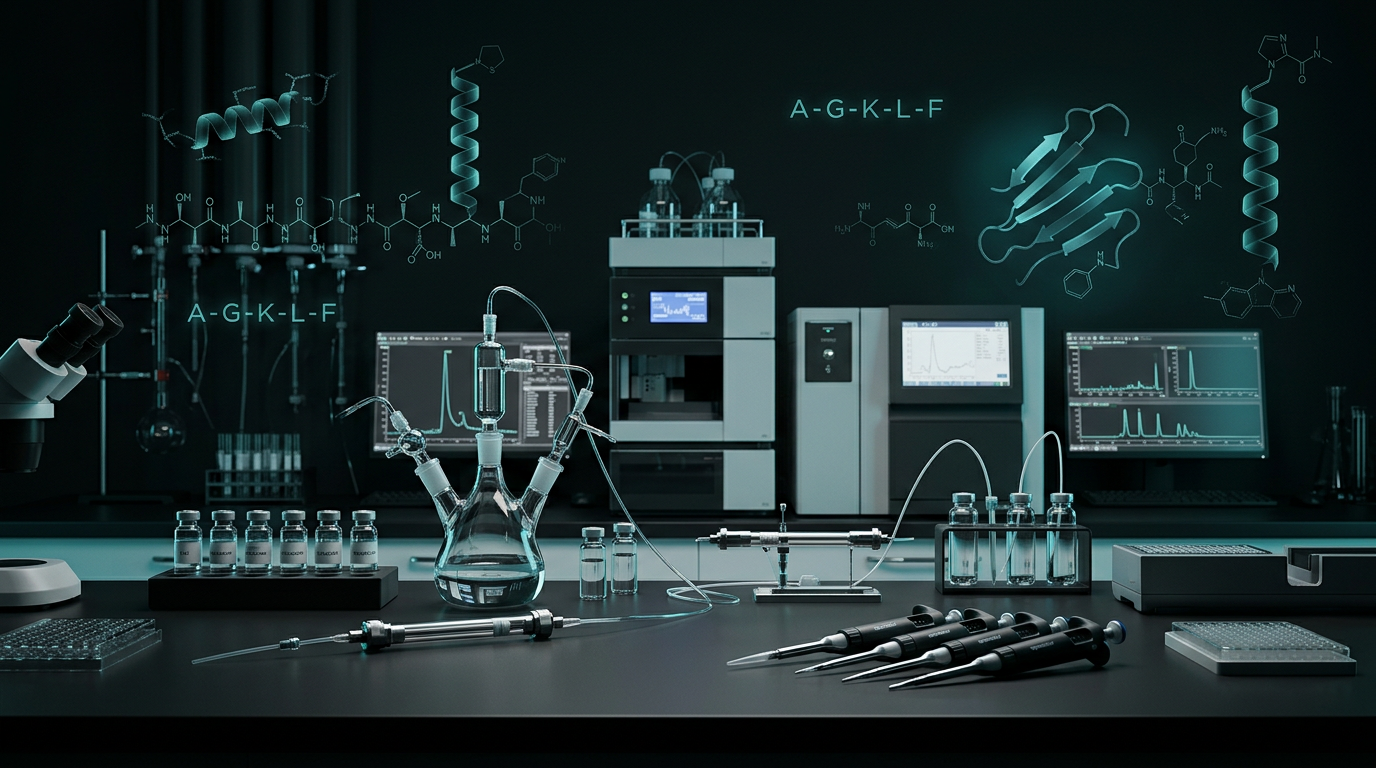
Defining Batch Tested Peptides
In the context of biochemical synthesis, batch tested peptides refer to specific lots of synthetic amino acid chains that have undergone rigorous analytical verification post-production. Unlike generic assumptions of purity, batch testing involves evaluating the specific output of a single synthesis cycle to ensure the final product aligns with intended molecular specifications.
Quantitative analysis is essential because peptide synthesis is a complex, multi-step process. Even minor fluctuations in reagents, coupling efficiency, or cleavage conditions can introduce impurities. Utilizing batch tested peptides allows researchers to work with materials where the chemical identity and purity levels are documented rather than estimated.
Analytical Methods for Sequence Verification
The primary gold standards for verifying batch tested peptides are High-Performance Liquid Chromatography (HPLC) and Mass Spectrometry (MS). HPLC is employed to determine the chromatographic purity of the sample by separating the target peptide from any truncated sequences or salts. A purity profile of >98% is typically sought for high-precision laboratory experiments.
Mass Spectrometry complements HPLC by confirming the molecular weight of the synthesized compound. By measuring the mass-to-charge ratio of the ions, researchers can verify that the synthesized sequence matches the theoretical mass of the intended peptide. This dual-verification process ensures that the batch is free from significant manufacturing artifacts or incorrect amino acid substitutions.
Impact on Experimental Reproducibility
Reproducibility is a cornerstone of the scientific method, and the use of batch tested peptides is a critical variable in achieving consistent results. If a peptide batch contains TFA (trifluoroacetic acid) residues, moisture, or isomeric impurities, the observed biological or chemical interactions may be skewed, leading to false positives or irreproducible data sets.
By utilizing lot-specific Certificates of Analysis (CoA), researchers can account for exact peptide content. This is particularly important when calculating molar concentrations for in vitro assays. Knowing the net peptide content versus the total lyophilized powder weight allows for precise dosing, which is fundamental for establishing dose-response curves in various research models.
Storage and Stability Considerations
Even high-quality batch tested peptides are subject to degradation if not handled with strictly controlled laboratory protocols. Factors such as oxidation, deamidation, and hydrolysis can compromise the integrity of the peptide over time. Researchers should store lyophilized peptides at -20°C or -80°C to maintain the stability verified during the initial batch testing.
When transitioning from a lyophilized state to a solution, the stability window decreases significantly. It is recommended to aliquot the peptides after reconstitution to avoid repeated freeze-thaw cycles, which can lead to aggregation or peptide cleavage. Documentation from batch testing often provides insights into the solubility characteristics of the specific lot, aiding in the selection of appropriate buffers.
Laborarory Research Use Only Disclaimer
The information provided regarding batch tested peptides is intended strictly for educational and laboratory research purposes. These compounds are chemicals designed for use in controlled research environments by qualified professionals and are not intended for diagnostic, therapeutic, or any form of clinical application in humans or animals.
This article does not constitute medical advice or instructions for use. The chemical properties and safety profiles of many experimental peptides are not fully established. It is the responsibility of the researcher to adhere to all institutional biosafety guidelines and regulatory requirements when handling these materials.
More questions?
Ask our Support Team — they can answer follow-up questions about this topic, COAs, storage, or anything else in the research library.
Tap the "Chat with us" tab on the right edge of any page.