Introduction to Peptide Material for Research
Peptide material for research consists of short chains of amino acids linked by peptide bonds, designed to mimic or modulate biological processes within controlled experimental environments. These biochemical tools are instrumental in mapping cellular signaling pathways, investigating receptor-ligand interactions, and developing novel diagnostic assays. Because peptides vary significantly in their hydrophobicity, charge, and stability, their utility in the laboratory is dictated by their sequence-specific properties.
In a laboratory setting, high-purity peptide material is essential to ensure that experimental outcomes are the result of the peptide itself rather than contaminating byproducts or residual solvents. Researchers typically utilize these compounds in vitro or in animal models to observe physiological responses, enzymatic degradation rates, and structural biology dynamics.
Biochemical Synthesis and Verification
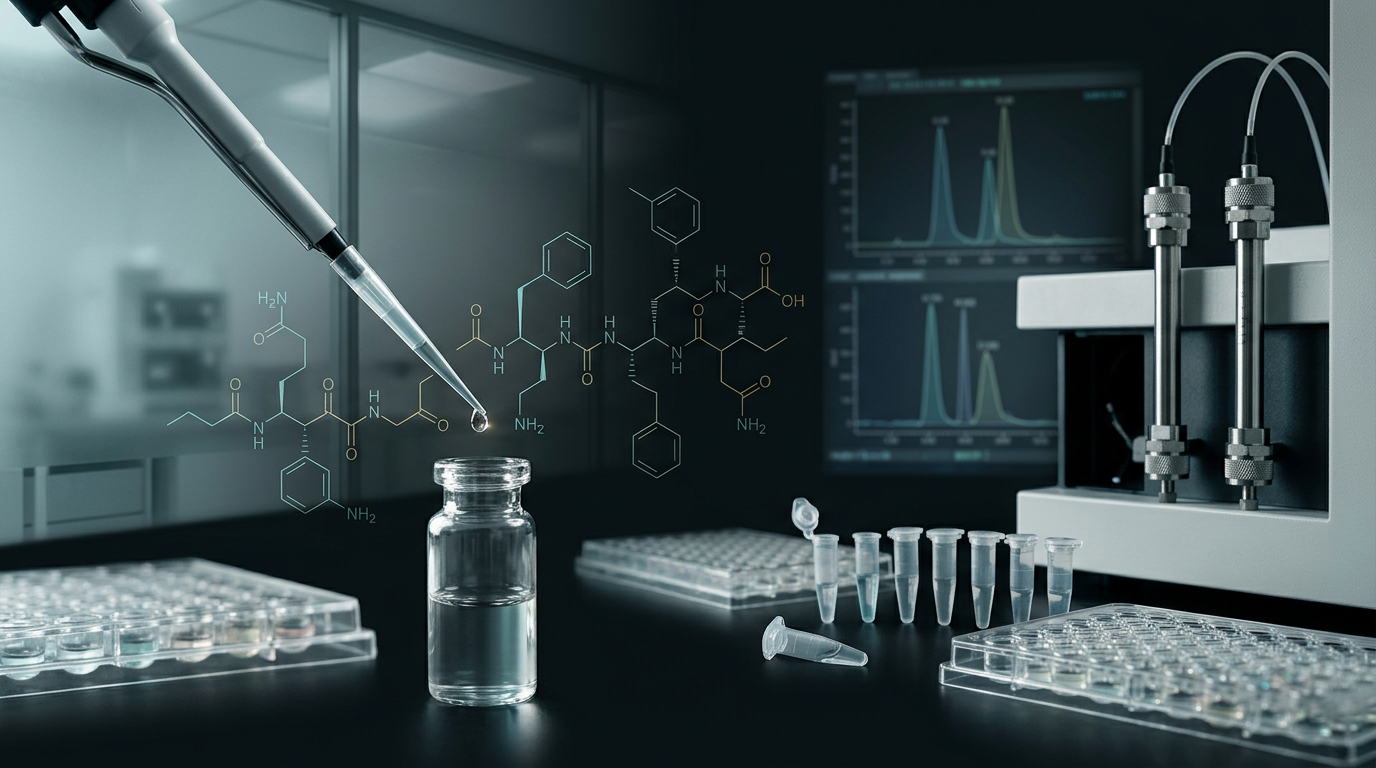
The production of peptide material for research primarily employs Solid-Phase Peptide Synthesis (SPPS). This process involves the sequential addition of protected amino acids to a resin-bound chain. By utilizing specific protecting groups like Fmoc or Boc, chemists can precisely control the sequence and minimize side reactions. Following synthesis, the peptide is cleaved from the resin and purified using High-Performance Liquid Chromatography (HPLC).
Verification of the final product is critical for scientific validity. Mass Spectrometry (MS) is utilized to confirm the molecular weight, while analytical HPLC determines the purity level—often requiring a threshold of >95% or >98% for rigorous quantitative research. These metrics ensure that the chemical identity of the peptide aligns with the theoretical model intended for the study.
Solubility and Reconstitution Protocols
One of the primary challenges when working with peptide material for research is determining the correct solvent for reconstitution. The physical behavior of a peptide is governed by its amino acid composition; for instance, peptides with a high proportion of hydrophobic residues may require dimethyl sulfoxide (DMSO) or dimethylformamide (DMF) for initial dissolution before being diluted into aqueous buffers.
Researchers must also account for the isoelectric point (pI) of the peptide. Adjustments to the pH of the solvent can significantly impact solubility and prevent aggregation. It is standard practice to use sterile, deoxygenated solvents and to avoid vigorous agitation, such as sonication, which can lead to the denaturation or degradation of sensitive sequences.
Storage and Long-Term Stability
The stability of peptide material for research is highly sensitive to environmental factors such as temperature, moisture, and light. Lyophilized (freeze-dried) peptides are generally stable at -20°C for several months, though -80°C is often preferred for long-term storage to minimize the risk of peptide bond hydrolysis or oxidation of residues like cysteine and methionine.
Repeated freeze-thaw cycles should be avoided as they introduce thermal stress and potential condensation. To maintain integrity, researchers are advised to aliquot the peptide into single-use volumes immediately after the initial reconstitution. Protecting the materials from light and maintaining a desiccated environment are further steps necessary to ensure reproducibility across experimental trials.
Laboratory Research Use Only Disclaimer
The peptide material for research described in this article is intended strictly for in vitro laboratory experiments and animal model studies. These compounds are not drugs, nor have they been approved for human or veterinary clinical applications. Any use of these materials outside of a controlled research environment is strictly prohibited.
This information is provided for educational purposes within the scientific community and does not constitute medical advice or therapeutic recommendations. It is the responsibility of the researcher to adhere to all local institutional biosafety committee (IBC) guidelines and regulatory requirements when handling synthetic peptides.
More questions?
Ask our Support Team — they can answer follow-up questions about this topic, COAs, storage, or anything else in the research library.
Tap the "Chat with us" tab on the right edge of any page.