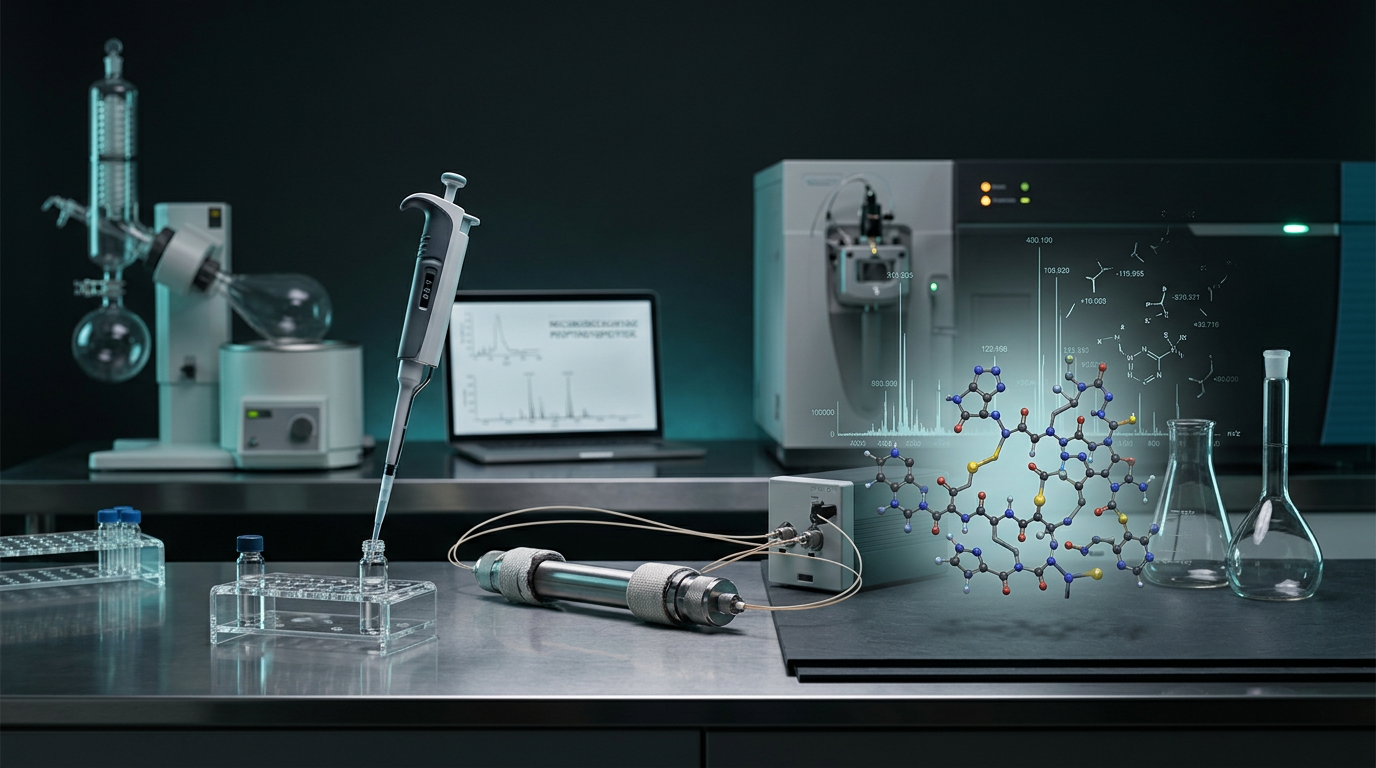
Understanding the Role of Peptide COA Lookup in Research
In professional laboratory settings, a Certificate of Analysis (COA) serves as the primary document verifying the identity and purity of a synthesized compound. Performing a peptide COA lookup allows researchers to match a specific batch number to its corresponding analytical data, ensuring that the material meets the rigorous standards required for experimental reproducibility. This document typically includes critical parameters such as the molecular weight, chemical formula, and net peptide content.
A standard COA is an essential component of the quality control (QC) process. By utilizing a peptide COA lookup system, laboratory personnel can confirm that the sequence provided by the manufacturer aligns with the intended research design. This verification step is a prerequisite for any data-driven investigation where chemical integrity directly influences the outcome of biological or chemical assays.
Technical Interpretation of High-Performance Liquid Chromatography
The most critical metric found during a peptide COA lookup is the purity percentage, typically determined via High-Performance Liquid Chromatography (HPLC). HPLC operates by passing the peptide through a stationary phase column under high pressure, separating the target molecule from synthesis byproducts, truncated sequences, or residual reagents. The result is a chromatogram where the area under the main peak reflects the relative purity of the sample.
Researchers should look for a purity level typically exceeding 98% for most quantitative applications. During a peptide COA lookup, it is vital to analyze the baseline of the HPLC trace; a clean baseline with a single, sharp symmetrical peak indicates high chemical homogeneity, whereas secondary peaks suggest the presence of diastereomers or other impurities that may interfere with experimental results.
Mass Spectrometry and Sequence Verification
While HPLC confirms purity, Mass Spectrometry (MS) is utilized to confirm identity. When conducting a peptide COA lookup, the MS report provides a mass-to-charge ratio (m/z) that must correspond to the theoretical molecular weight of the peptide sequence. This analytical technique ensures that the peptide contains the correct amino acid assembly and has not been subjected to unexpected chemical modifications during synthesis or cleavage.
Commonly, Electrospray Ionization (ESI) or Matrix-Assisted Laser Desorption/Ionization (MALDI-TOF) results are included in the COA. A successful lookup will show a dominant peak at the expected mass, providing the researcher with the empirical evidence needed to validate the chemical structure before the material is reconstituted for laboratory use.
Practical Storage and Laboratory Handling Considerations
Beyond verification of analytical data, a peptide COA lookup often provides information regarding the counter-ion content and the physical state of the lyophilizate. Most research peptides are supplied as acetate or trifluoroacetate (TFA) salts. Understanding the salt content is necessary for calculating the exact concentration of the 'net' peptide, which avoids dosing errors during in vitro or in vivo modeling.
Proper handling post-verification is equally important. Once the purity and identity are confirmed, peptides should be stored in an environment that prevents degradation. Most lyophilized peptides remain stable at -20°C or -80°C. Researchers are advised to aliquot the material after reconstitution to avoid repeated freeze-thaw cycles, which can lead to peptide hydrolysis and primary structure fragmentation.
Laboratory Research Use Only Disclaimer
The information regarding peptide COA lookup and analytical interpretation provided herein is strictly for educational and laboratory research purposes. All peptides and chemical compounds discussed are intended exclusively for use by qualified researchers in controlled laboratory or institutional settings.
No information provided in this article should be construed as medical advice or as a recommendation for human or veterinary use. These substances are not approved for the diagnosis, treatment, or prevention of any disease. Compliance with local regulations and institutional biosafety protocols is the sole responsibility of the investigating scientist.
More questions?
Ask our Support Team — they can answer follow-up questions about this topic, COAs, storage, or anything else in the research library.
Tap the "Chat with us" tab on the right edge of any page.