Overview of Research Peptide Vials
In the context of biochemical experimentation, research peptide vials serve as the primary containment system for synthesized amino acid chains. These vials are engineered to maintain the structural integrity and chemical stability of the peptide sequences during transport and subsequent laboratory storage. Precision in the manufacturing of these containers is critical to prevent degradation and ensure that experimental results remain reproducible across different study phases.
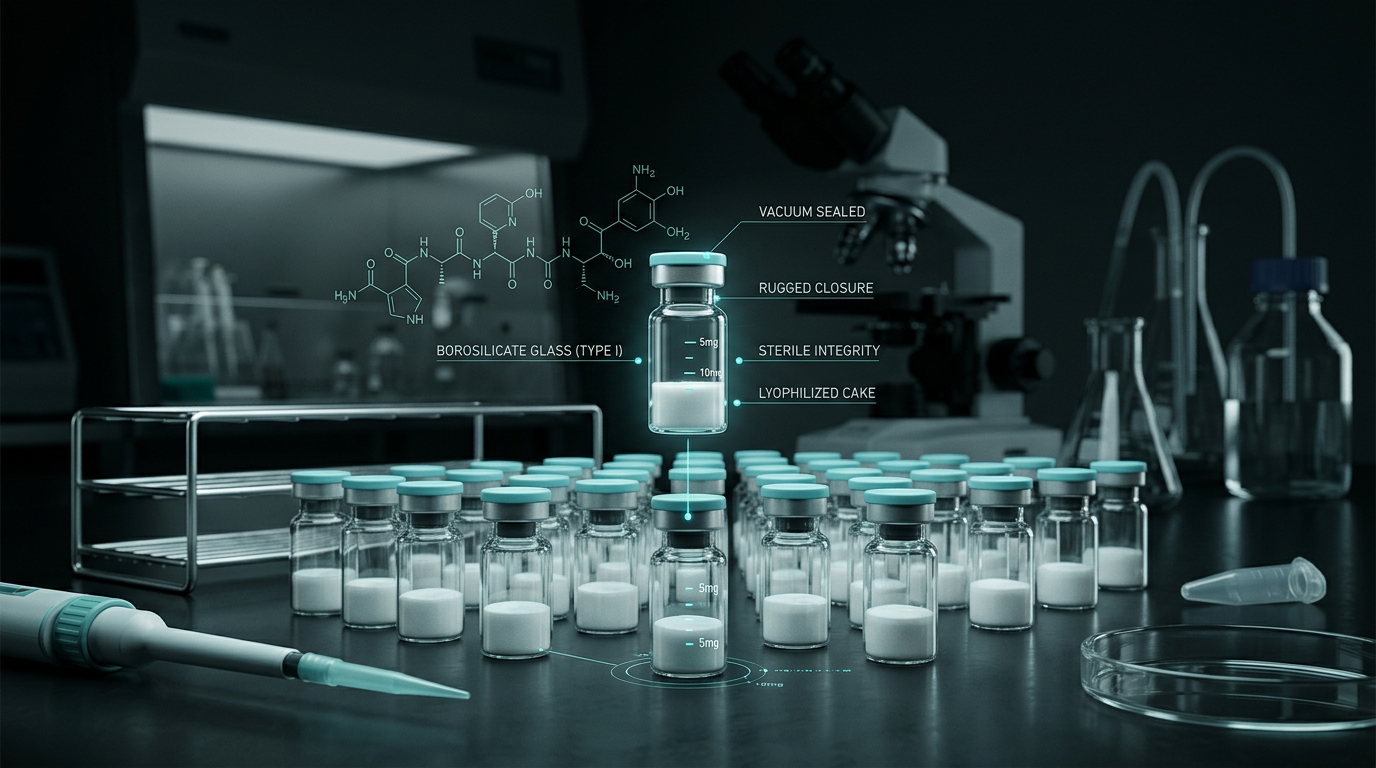
Most high-grade research peptide vials are constructed from Type I borosilicate glass, which is selected for its superior chemical resistance and low expansion coefficients. This material minimizes the risk of alkali leaching, which can significantly alter the pH of a solution once the peptide is reconstituted, potentially leading to unwanted chemical reactions or peptide precipitation.
The Science of Lyophilization and Vacuum Sealing
The internal environment of research peptide vials is typically characterized by a low-moisture, vacuum-sealed state. Peptides are frequently provided in a lyophilized (freeze-dried) format. This process removes water through sublimation, which serves to inhibit hydrolytic degradation and microbial enzymatic activity. By maintaining a vacuum or an inert gas headspace, such as nitrogen, researchers can mitigate oxidative stress on sensitive residues like methionine or cysteine.
The integrity of the seal, usually achieved through a combination of a butyl rubber stopper and an aluminum crimp cap, is vital for long-term stability. The stopper must provide an effective gas barrier while remaining compatible with common laboratory solvents like bacteriostatic water or sterile saline, ensuring that no elastomers transition into the peptide solution during the reconstitution process.
Material Compatibility and Adsorption Mitigation
A significant challenge when working with research peptide vials is the phenomenon of non-specific adsorption. Because peptides are amphiphilic molecules, they may adhere to the glass surface of the vial, reducing the effective concentration of the sample. To counter this, many laboratories utilize vials with specialized internal coatings or low-protein-binding glass to ensure maximum recovery of the analyte during aspiration.
Furthermore, temperature fluctuations can affect the physical properties of the vial and its contents. Borosilicate glass is favored because it can withstand rapid thermal shifts—from cryogenic storage at -80°C to room temperature—without fracturing. This thermal resilience is mandatory for preserving the secondary and tertiary structures of complex peptide molecules over extended research timelines.
Practical Considerations for Laboratory Handling
Researchers must exercise precise technique when accessing research peptide vials to avoid contamination or sample loss. Using aseptic techniques, including the sterilization of the septum with isopropyl alcohol, is a standard prerequisite. When reconstituting, it is scientifically prudent to allow the solvent to flow gently down the side of the vial wall rather than injecting it directly onto the lyophilized cake, which helps avoid mechanical shearing of the peptide bonds.
Once a vial has been punctured, its shelf life decreases regardless of storage temperature. It is common practice to aliquot the reconstituted solution into smaller, secondary containers if the entire volume is not required for a single assay. This minimizes repeated freeze-thaw cycles, which are known to cause physical stress to the molecules and may lead to aggregation or loss of biological activity.
Laboratory Use Only and Safety Disclaimer
The information presented regarding research peptide vials is intended solely for scientific literacy and laboratory guidance. These containers and the substances they hold are strictly for in vitro or animal-model research applications. They are not intended for human consumption, clinical diagnostic procedures, or any therapeutic use.
Compliance with local and international laboratory safety protocols is mandatory when handling any peptide research materials. This article does not constitute medical advice or a recommendation for clinical application. All experimental procedures should be conducted by qualified professionals within a controlled research environment.
More questions?
Ask our Support Team — they can answer follow-up questions about this topic, COAs, storage, or anything else in the research library.
Tap the "Chat with us" tab on the right edge of any page.