The Significance of a Research Peptide COA
In the field of biochemical synthesis, a research peptide COA (Certificate of Analysis) serves as the primary document verifying the chemical properties and quality standards of a specific lot. For researchers, this document is essential for ensuring experimental reproducibility. It provides a formal report on the analytical testing performed after the solid-phase peptide synthesis (SPPS) and subsequent purification processes.
A comprehensive COA offers quantitative data regarding the peptide's identity, purity, and physical characteristics. Without this verification, laboratory personnel cannot account for potential impurities that might interfere with receptor-binding assays, cell signaling studies, or metabolic stability tests.
Analytical Components: HPLC and Mass Spectrometry
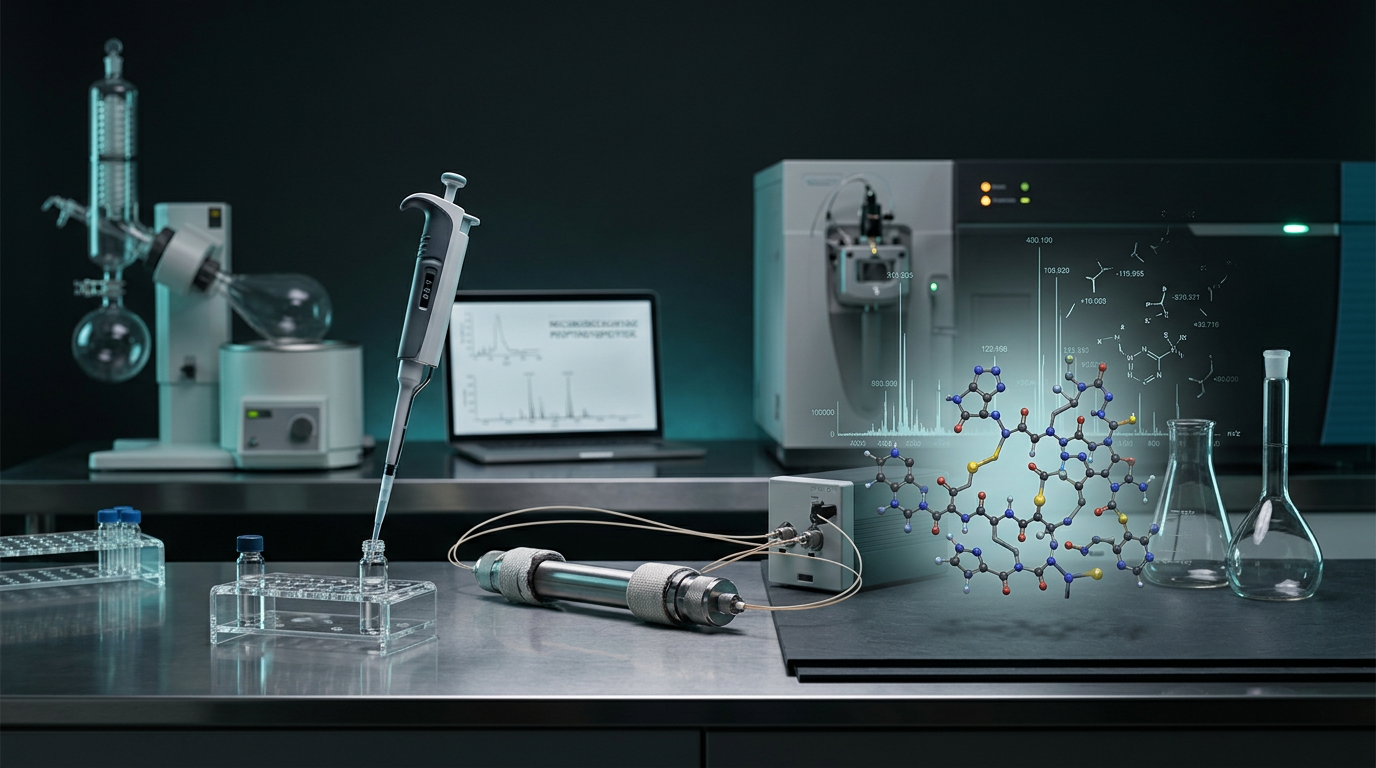
The most critical elements of a research peptide COA are the data derived from High-Performance Liquid Chromatography (HPLC) and Mass Spectrometry (MS). HPLC is utilized to determine the chromatographic purity of the sample. By measuring the area under the curve (AUC) of the primary peak relative to secondary peaks, the laboratory can calculate the percentage of the target peptide present. Most high-grade research materials aim for a purity threshold of >95% or >98%.
Mass Spectrometry is employed to confirm the molecular identity of the compound. The COA will list the theoretical molecular weight alongside the found molecular weight. A precise match between these values confirms that the amino acid sequence has been synthesized correctly and that the intended molecular structure is present in the vial.
Physical Characteristics and Secondary Testing
Beyond purity and identity, a research peptide COA typically details the physical appearance of the lyophilized powder and its solubility profile. Common observations include color and consistency, such as a white, flocculent, or granular powder. These traits are important for researchers when preparing stock solutions for in vitro applications.
Secondary metrics may also include the net peptide content, which accounts for the presence of counter-ions (such as acetate or TFA) and residual moisture. While the chromatographic purity might be high, the actual mass of the peptide itself within the total powder weight is determined by this nitrogen analysis or amino acid analysis, which is vital for precise molar concentration calculations.
Mitigating Variables in Laboratory Experiments
Utilizing a verified research peptide COA allows investigators to mitigate variables that could skew data. Residual solvents or truncated peptide sequences (shorter versions of the target peptide) can lead to non-specific biological responses or cytotoxicity in sensitive cell cultures. By reviewing the COA, researchers can confirm the absence of these contaminants.
Furthermore, the COA records the batch number, which facilitates longitudinal studies. If a researcher observes a shift in experimental results over several months, the COA provides a reference point to determine if the variation is due to the chemical integrity of the reagent or other environmental factors in the lab.
Disclaimer for Laboratory Research Use Only
The information provided regarding the interpretation of a research peptide COA is intended for educational purposes within a scientific context. All materials mentioned are strictly for laboratory research and development use only. They are not intended for human or animal clinical use, nor for any therapeutic or diagnostic application.
These compounds must be handled by qualified professionals in a controlled environment. The data provided on a COA does not constitute a recommendation for use but serves as a technical report on the chemical specifications of the material for research purposes.
More questions?
Ask our Support Team — they can answer follow-up questions about this topic, COAs, storage, or anything else in the research library.
Tap the "Chat with us" tab on the right edge of any page.