Understanding Truecore Peptides in Scientific Research
In the landscape of biochemical synthesis, Truecore peptides represent a category of high-purity laboratory reagents utilized for investigating secondary messenger systems and protein-protein interactions. These compounds are engineered to meet specific sequence motifs required for binding affinity studies, allowing researchers to observe enzymatic activities or receptor signaling pathways with a high degree of precision.
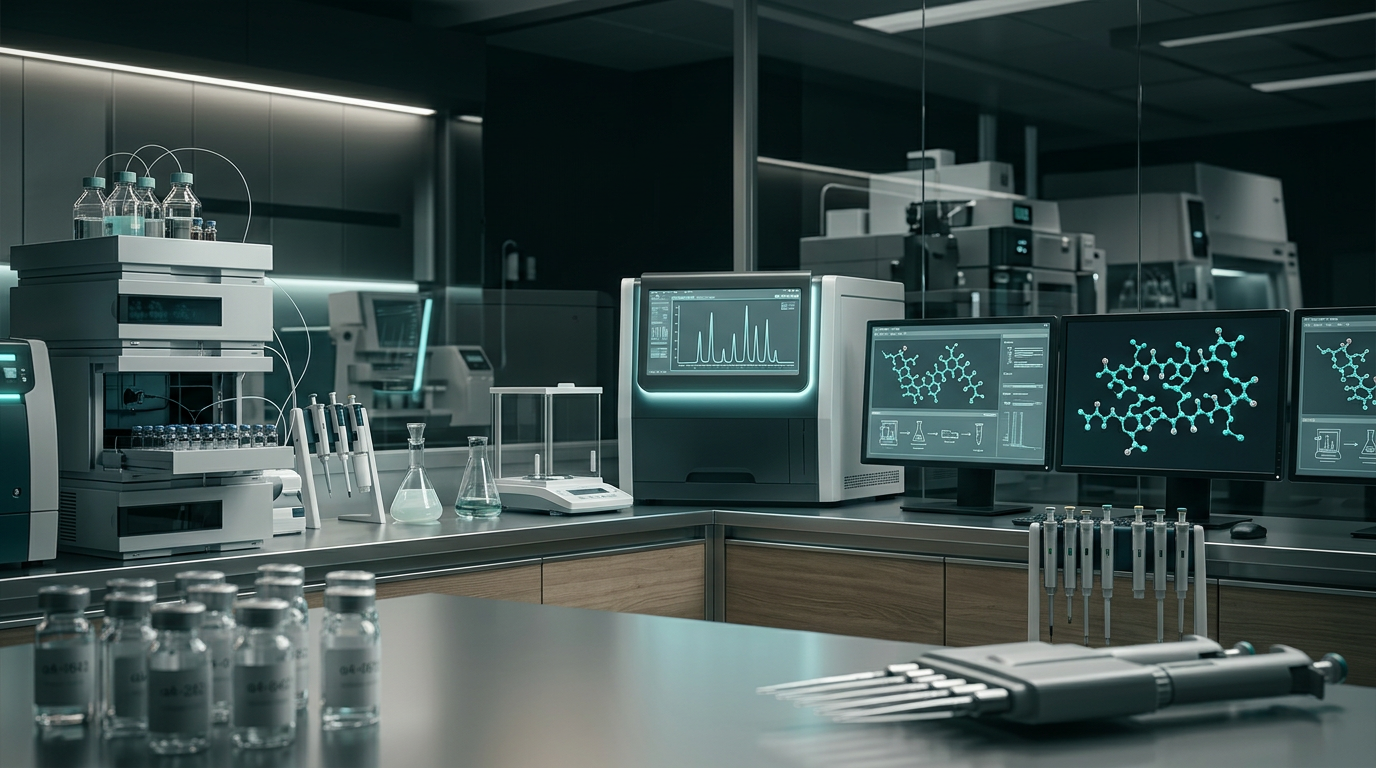
The fundamental utility of these peptides lies in their structural consistency. When utilized as analytical standards, they provide a baseline for mass spectrometry and high-performance liquid chromatography (HPLC) benchmarks, ensuring that experimental data is derived from a reliable molecular source.
Molecular Integrity and Synthesis Protocols
The synthesis of Truecore peptides typically involves Solid-Phase Peptide Synthesis (SPPS), where amino acids are added sequentially to a resin substrate. This process requires rigorous monitoring to prevent racemic impurities or truncated sequences. The "core" integrity of the peptide refers to its primary sequence accuracy, which is vital for maintaining the intended folded conformation in aqueous environments.
To verify the chemical identity of these sequences, laboratories employ electrospray ionization mass spectrometry (ESI-MS). This technique confirms that the molecular weight correlates precisely with the theoretical mass of the synthesized peptide, a prerequisite for any quantitative biochemical assay.
Applications in Proteomics and Structural Biology
Researchers utilize Truecore peptides to map epitope binding sites and to function as competitive inhibitors in receptor-ligand kinetics studies. Their predictable behavior in various pH levels and ionic strengths makes them suitable for nuclear magnetic resonance (NMR) spectroscopy, which helps elucidate the three-dimensional structures of peptides in solution.
Furthermore, these peptides serve as vital tools in the development of diagnostic assays. By acting as target substrates for specific proteases, they allow for the quantification of enzymatic velocity and the determination of Michaelis-Menten constants within controlled laboratory models.
Practical Considerations for Laboratory Handling
Maintaining the stability of Truecore peptides requires strict adherence to cold-chain logistics. Most lyophilized peptides are hygroscopic and prone to degradation if exposed to moisture or fluctuating temperatures. It is standard practice to store these compounds at -20°C or -80°C for long-term preservation, ensuring that the peptide backbone remains intact and free from hydrolytic cleavage.
Upon reconstitution, the choice of solvent—such as sterile deionized water or buffered saline—must be dictated by the peptide's isoelectric point (pI). Incorrect pH levels can lead to precipitation or aggregation, which would compromise the validity of the research data. Researchers are advised to aliquot the solution to minimize detrimental freeze-thaw cycles.
Research Use Only Disclaimer
The information provided regarding Truecore peptides is intended solely for laboratory research and educational purposes. These substances are not intended for human or veterinary use, nor are they designed for therapeutic, diagnostic, or clinical applications.
All experimental procedures involving these peptides must be conducted in a controlled environment by qualified professionals adhering to established biosafety protocols. This article does not constitute medical advice or a recommendation for the consumption of any synthesized peptide.
More questions?
Ask our Support Team — they can answer follow-up questions about this topic, COAs, storage, or anything else in the research library.
Tap the "Chat with us" tab on the right edge of any page.