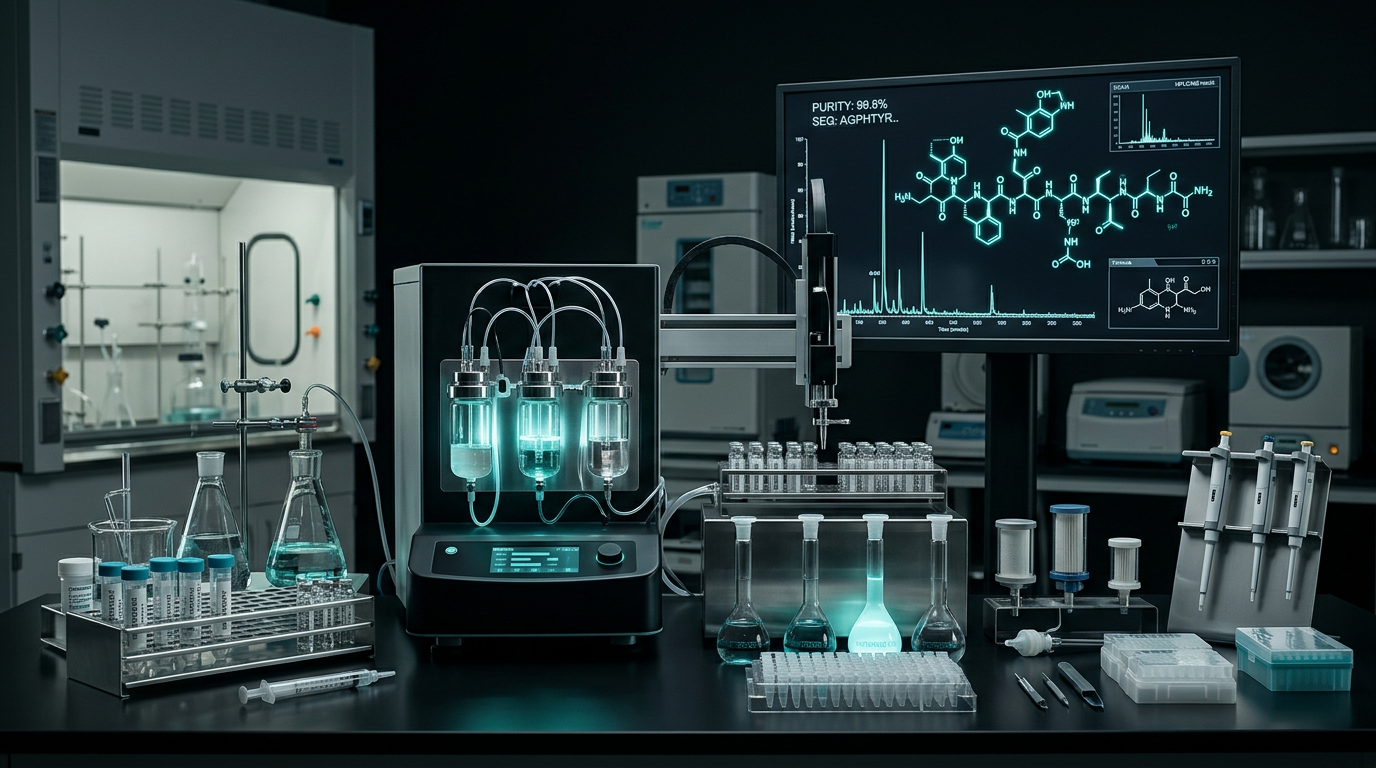
Introduction to Verified Research Peptides
In the field of biochemical research, the integrity of experimental data is fundamentally dependent on the purity and identity of the chemical reagents utilized. Verified research peptides refer to synthetic amino acid chains that have undergone rigorous analytical validation to confirm their primary sequence, mass, and purity levels. This verification process ensures that the molecules present in a given sample match the intended chemical structure without significant interference from truncated sequences or residual solvents.
Precision in peptide synthesis is susceptible to various side reactions, including incomplete coupling or deprotection during solid-phase peptide synthesis (SPPS). Consequently, the use of verified research peptides is essential for maintaining reproducibility across laboratory trials. Without objective verification through external analytical methods, researchers may encounter anomalous data points that stem from molecular impurities rather than the biological mechanism under investigation.
Analytical Methods for Purity Assessment
The gold standard for determining the quality of verified research peptides involves two primary analytical techniques: High-Performance Liquid Chromatography (HPLC) and Mass Spectrometry (MS). HPLC is utilized to assess the chromatographic purity of the peptide by separating the target molecule from synthetic byproducts. A purity threshold of 98% or higher is typically targeted for sophisticated in vitro and in vivo research models to ensure that observed physiological responses are attributed solely to the target peptide.
Mass Spectrometry complements HPLC by confirming the molecular weight of the synthesized compound. Electro-Spray Ionization (ESI) or Matrix-Assisted Laser Desorption/Ionization (MALDI) techniques allow researchers to verify that the mass-to-charge ratio aligns with the theoretical molecular weight of the peptide sequence. This dual-layered validation provides a high degree of confidence that the material is free from significant isotopic deviations or unintended modifications.
Counterion Presence and Solubility Factors
When working with verified research peptides, laboratory personnel must account for the presence of counterions, such as Trifluoroacetic acid (TFA) or acetate, which remain after the synthesis and purification process. These ions are necessary for stabilizing the peptide but can contribute to the overall weight of the lyophilized powder. Understanding the peptide content versus the total powder mass is critical for calculating precise molar concentrations in experimental buffers.
Solubility is another critical factor influenced by the peptide's primary sequence and its verification status. Hydrophobic sequences may require specific reconstitution protocols involving sterile water, acetic acid, or dimethyl sulfoxide (DMSO). Verified research peptides often come with solubility guidelines based on their specific chemical profile, allowing researchers to avoid aggregation and ensure a homogenous solution for consistent delivery in laboratory assays.
Storage and Stability in Laboratory Settings
The longevity of verified research peptides is highly dependent on environmental controls. Lyophilized peptides are generally stable when stored at -20°C or -80°C, which minimizes the risk of oxidation and proteolytic degradation. Exposure to moisture, light, and repeated freeze-thaw cycles can compromise the structural integrity of the peptide, leading to deamidation or the formation of disulfide-linked aggregates.
To maintain the 'verified' status of a peptide throughout a longitudinal study, researchers often aliquot the reconstituted solution into single-use vials. This practice limits atmospheric exposure and preserves the original analytical profile of the reagent. Proper labeling and documentation of the lot-specific Certificate of Analysis (COA) are standard procedures in GLP-compliant environments to ensure traceability.
Laboratory Use Only and Research Disclaimer
The information provided regarding verified research peptides is intended strictly for scientific education and laboratory research applications. These compounds are designed for use in controlled experimental environments by qualified professionals and are not intended for human or animal consumption.
This article does not constitute medical advice or therapeutic recommendations. The chemical properties and biological activities described herein pertain solely to academic and industrial research contexts. Researchers are responsible for adhering to all local and federal regulations regarding the handling and disposal of high-purity synthetic peptides.
More questions?
Ask our Support Team — they can answer follow-up questions about this topic, COAs, storage, or anything else in the research library.
Tap the "Chat with us" tab on the right edge of any page.