Introduction to Peptide Documentation
In the context of biochemical research, peptide documentation refers to the comprehensive suite of analytical reports and technical data sheets that verify the identity, purity, and chemical composition of a synthesized amino acid chain. Precise documentation is the cornerstone of experimental reproducibility, allowing researchers to account for specific molar masses and potential salt content before initiating in vitro or in vivo assays.
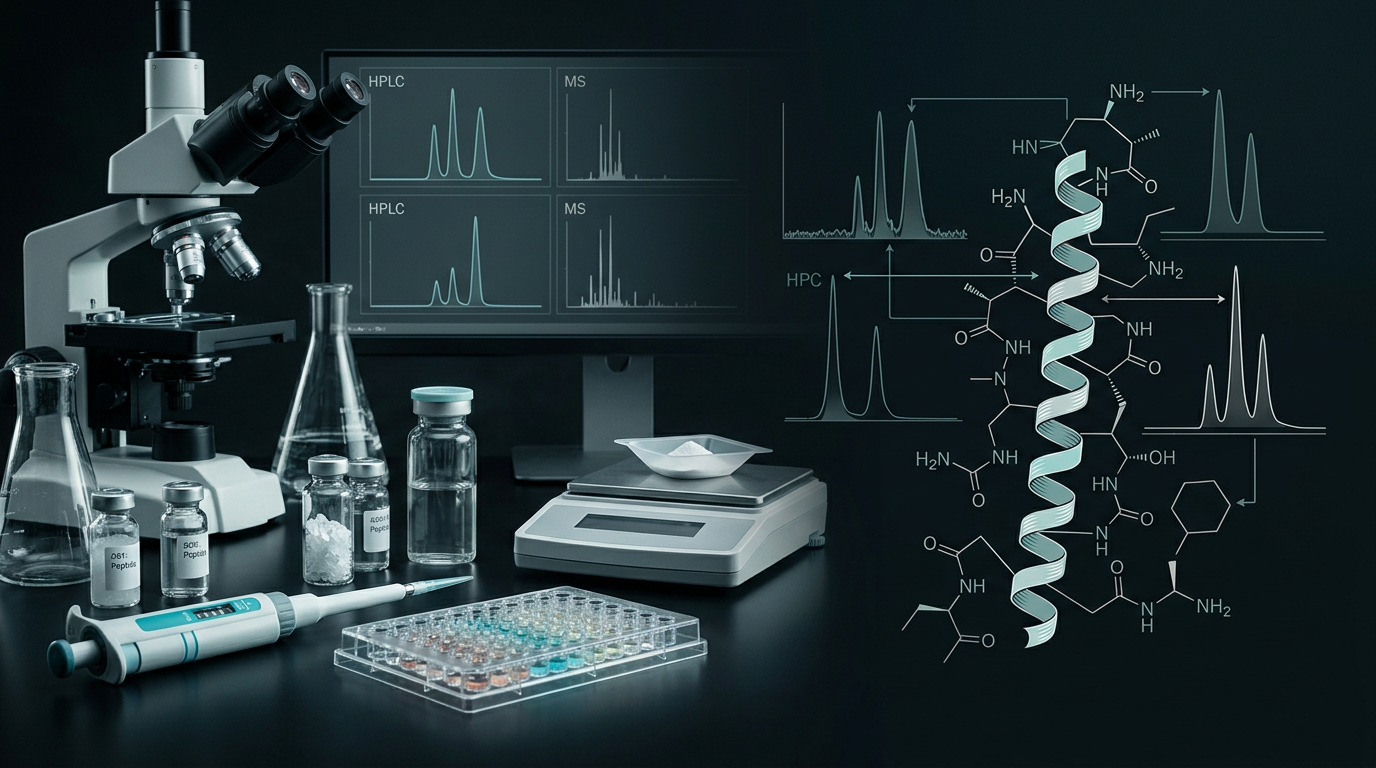
Standard documentation packages typically include a Certificate of Analysis (COA), High-Performance Liquid Chromatography (HPLC) profiles, and Mass Spectrometry (MS) data. These documents serve as the primary evidence that the peptide sequence matches the specified design and that the substance is free from significant manufacturing artifacts or degradation products.
HPLC and Mass Spectrometry Verification
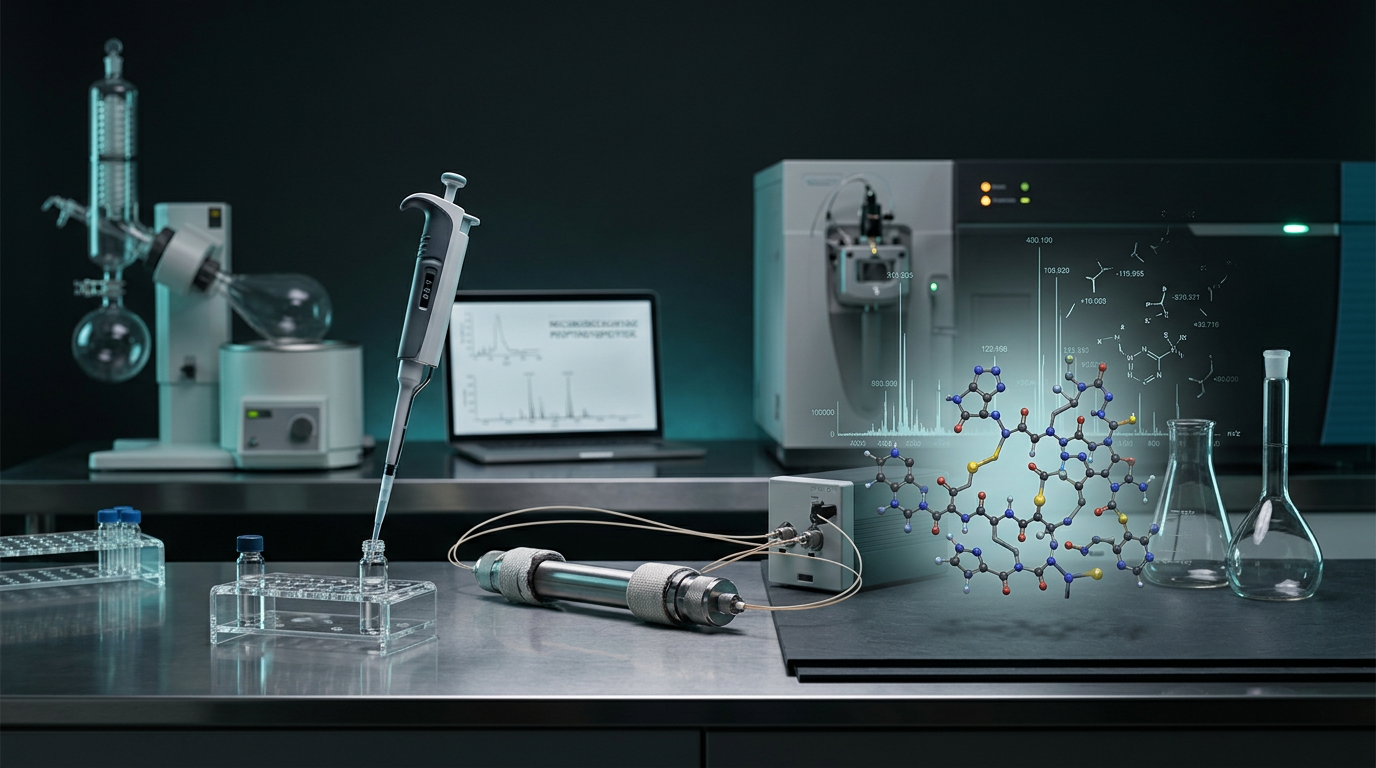
The core of rigorous peptide documentation lies in chromatographic and spectroscopic analysis. HPLC is utilized to determine the analytical purity of the peptide by separating the target sequence from truncated sequences or protected intermediates. The resulting chromatogram should display a primary peak, the area of which, relative to the total peak area, defines the purity percentage.
Mass Spectrometry complements this by confirming the molecular weight of the peptide. By measuring the mass-to-charge ratio (m/z) of the ionized sample, researchers can verify that the synthesized molecule aligns with the theoretical molecular weight calculated from the amino acid sequence. Discrepancies in these documents may indicate improper synthesis or the presence of unexpected adducts.
Interpreting Salt Content and Peptide Content
It is standard for peptide documentation to distinguish between the 'peptide purity' and the 'net peptide content.' While purity refers to the percentage of the target peptide relative to other organic impurities, the net peptide content accounts for non-peptide components such as counterions (e.g., acetate or TFA salts) and residual moisture. This distinction is vital for calculating exact molar concentrations in quantitative studies.
Documentation detailing the counterion type is particularly important because certain ions may interfere with specific biological assays or alter the solubility profile of the peptide. Accurate record-keeping of these variables ensures that experimental variances are attributed to the peptide's biological activity rather than its chemical formulation.
Storage Conditions and Stability Data
Detailed peptide documentation should also include guidance on the physical state of the product—typically a lyophilized powder—and its recommended storage parameters. Lyophilization is used to enhance the stability of the peptide by removing moisture that could facilitate hydrolysis or enzymatic degradation. Documentation ideally specifies the temperature requirements (often -20°C or -80°C) to maintain the structural integrity over time.
Researchers should consult the provided stability data to understand the risk of oxidation or disulfide bond formation during reconstitution. Tracking the lot number and manufacturing date provided in the documentation ensures that the material remains within its optimal window for viable scientific data collection.
Laboratory Research Use and Disclaimer
The information provided regarding peptide documentation is intended solely for the advancement of laboratory research and chemical analysis. Accurate documentation is a technical requirement for high-fidelity scientific study but does not constitute an endorsement of the substance's safety or efficacy in any clinical capacity.
All materials described are strictly for laboratory research use only. They are not intended for human or animal consumption, nor are they to be used for diagnostic, therapeutic, or medical purposes. Strict adherence to institutional biosafety protocols and chemical handling guidelines is mandatory when utilizing documented peptides in a research setting.
More questions?
Ask our Support Team — they can answer follow-up questions about this topic, COAs, storage, or anything else in the research library.
Tap the "Chat with us" tab on the right edge of any page.