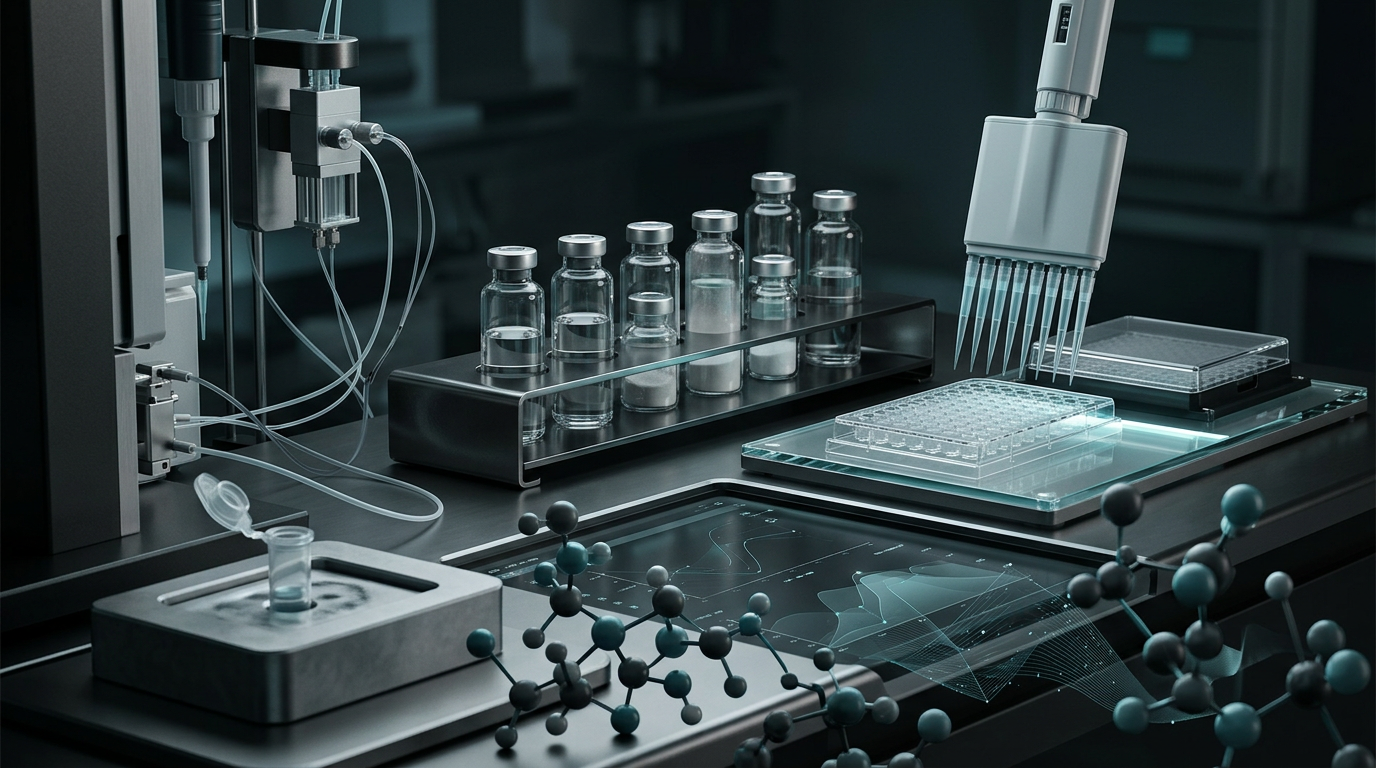
Overview of Truecore Research Peptides
Truecore research peptides represent a specialized class of synthesized amino acid chains engineered for high-precision laboratory experimentation. These compounds are utilized across diverse scientific disciplines, ranging from cellular signaling studies to structural biology. Unlike clinical-grade pharmaceuticals, these peptides are produced under stringent laboratory standards tailored to investigative environments where chemical consistency and sequence accuracy are paramount.
The primary focus of analyzing these peptides is to understand their interaction with biological receptors and enzymes. By maintaining a high degree of structural integrity, researchers can minimize experimental variables and ensure that observed biological responses are attributable to the peptide sequence itself rather than contaminants or degradation products.
The Science of Solid-Phase Peptide Synthesis (SPPS)
The production of Truecore research peptides typically leverages Solid-Phase Peptide Synthesis (SPPS), a method that allows for the precise assembly of amino acids. In this process, the C-terminal amino acid is covalently bonded to an insoluble polymeric support. Subsequent amino acids are added in a stepwise fashion, utilizing protecting groups such as Fmoc or Boc to prevent unwanted side reactions.
Precision in SPPS is vital for ensuring the correct primary structure of the peptide. Following synthesis, the peptide is cleaved from the resin and subjected to global deprotection. High-performance liquid chromatography (HPLC) is then utilized as the industry standard for purification, isolating the target molecule from truncated sequences and chemical byproducts.
Purity Verification and Analytical Characterization
To ensure the reliability of experimental data, Truecore research peptides must undergo rigorous analytical validation. Mass Spectrometry (MS) is employed to confirm the molecular weight of the synthesized compound, ensuring it aligns with the theoretical mass of the intended sequence. This process helps identify potential errors in the amino acid sequence or the presence of incomplete deprotection.
Analytical HPLC is further used to determine the purity percentage, often targeting a threshold of 98% or higher for research applications. This level of purity is essential in biochemical assays where trace impurities could interfere with ligand-binding kinetics or induce cytotoxic effects in cell culture models.
Laboratory Handling and Reconstitution Protocols
The stability of Truecore research peptides is highly dependent on environmental factors, including temperature, light exposure, and moisture. In their lyophilized form, these peptides are generally stable at sub-zero temperatures (e.g., -20°C or -80°C). Prolonged exposure to room temperature can lead to oxidation or deamidation, particularly in sequences containing sensitive residues like methionine or asparagine.
When preparing many Truecore research peptides for use, researchers must follow specific reconstitution guidelines. The choice of solvent—such as sterile bacteriostatic water, acetic acid, or dimethyl sulfoxide (DMSO)—is determined by the peptide's hydrophobicity. Improper pH levels during reconstitution can lead to precipitation or rapid degradation, compromising the integrity of the reagent.
Research Use Only and Safety Disclaimer
All information provided regarding Truecore research peptides is strictly for educational and laboratory research purposes. These compounds have not been approved for human or veterinary use, including but not limited to therapeutic, diagnostic, or cosmetic applications.
It is the responsibility of the laboratory researcher to adhere to local and federal regulations regarding the handling of synthetic peptides. These substances are intended only for use by qualified professionals in a controlled instructional or research setting. Under no circumstances should these research-grade materials be ingested or administered to humans or animals.
More questions?
Ask our Support Team — they can answer follow-up questions about this topic, COAs, storage, or anything else in the research library.
Tap the "Chat with us" tab on the right edge of any page.